
Ukraine's Operation VIVALDI: political, military, and technological success against all odds. And yet, another wake-up call for Europe.
Beyond its strategic and tactical gains, Ukraine's Operation Vivaldi showcased the conflict's entire spectrum, from political layercake to mastery of space, cyber, and AI-induced battlefield cognitive security challenges. With its lot of frontlines lessons for the fight-worthiness of Europe, will Vivaldi's wake-up call be heard? Read an overview and opinion piece by Christophe Bosquillon.

Ukraine's 3rd Army Corps has completed the fourth phase of Operation Vivaldi. Vivaldi's strategic objective was to prevent Russian forces from outflanking the Sloviansk-Kramatorsk urban agglomeration and trapping it in a pincer movement. Tactically, that meant engaging smaller, more nimble, partly automatised Ukrainian forces, preventing Russian forces from restoring command and control and establishing stable defensive lines.
Operation Vivaldi demonstrated what success looks like when Ukrainian forces combine, at speed, satellites communications, cyber defences, terrestrial and aerial drones, and decentralized command and control, fending off adversarial cyber-AI interference in battlefield cognitive security. Ukrainian forces also managed to maintain, rather than deplete, defensive positions in other sectors. These developments have further complicated the Kremlin's objective of capturing Donetsk and Luhansk regions in the foreseeable future.
On the frontlines
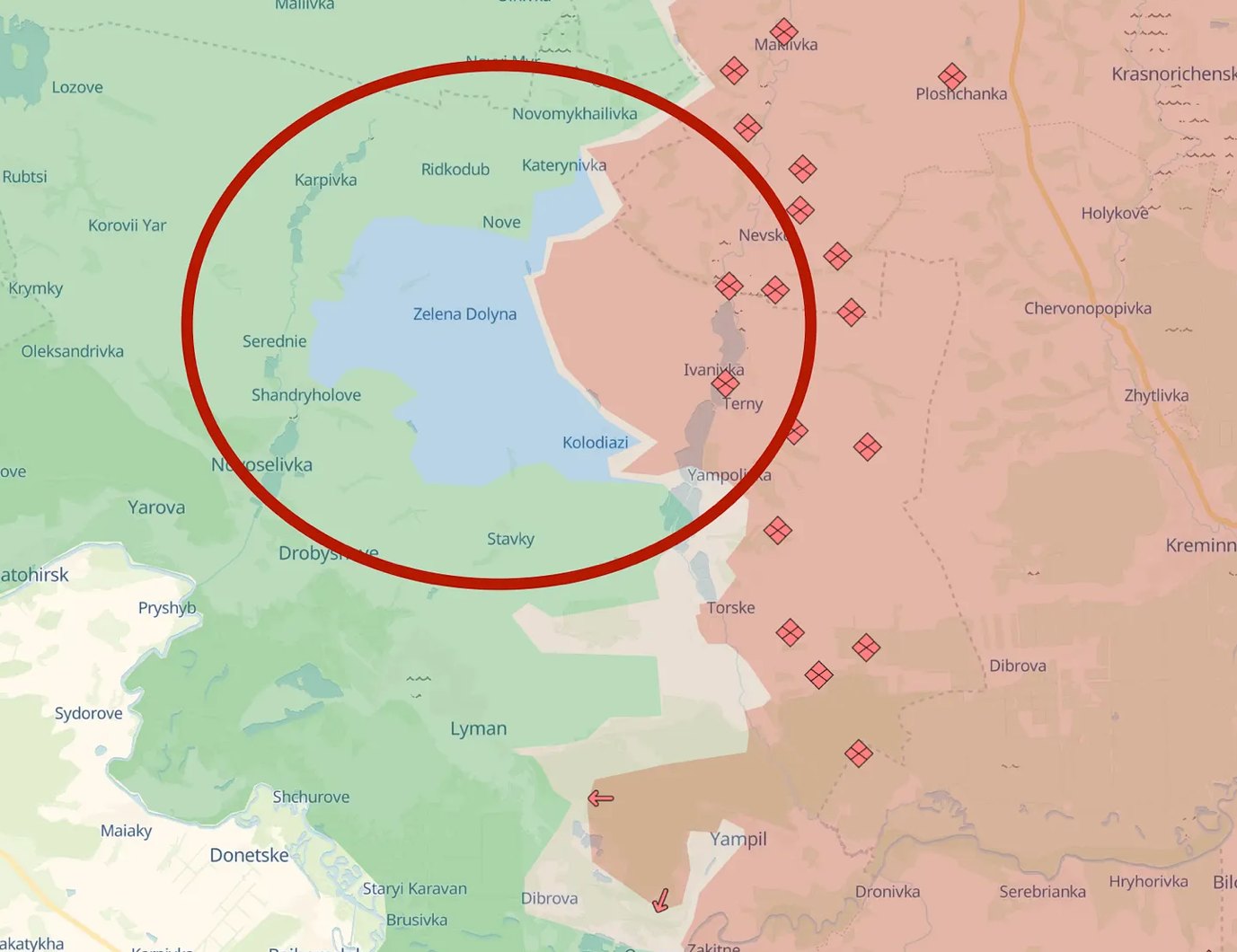
As reported by Giorgi Revishvili, Ukrainian forces have liberated 277 square kilometers of territory, regained control of nine settlements, and restored full control over seven additional settlements, including Zelena Dolyna, Lypove, and Kolodiazi. The operation disrupted the Russian West Grouping of Forces' offensive and forced the redeployment of elements of the 1st Tank Army, easing pressure on Kupiansk-Vuzlovyyi. Ukrainian forces also secured the Kharkiv-Sloviansk highway, a critical logistical artery supporting Ukrainian troops in Donbas.
Rise of the machines
Russian personnel losses throughout the operation are estimated to have exceeded 8,000, including 3,000 in the latest (fourth) phase. Ukrainian loss of life, though tragically significant, remained one order of magnitude smaller. How is that even possible? It is the use of thousands of battlefield ground robots that helped save 2,500 fighters lives by conservative estimates, and potentially up to 3,000 or more lives, depending on sources. These are fair estimates, considering that the 3,000+ destroyed ground robots acted in replacement of a van or a car with at least one human driver, who would have met the same fate.
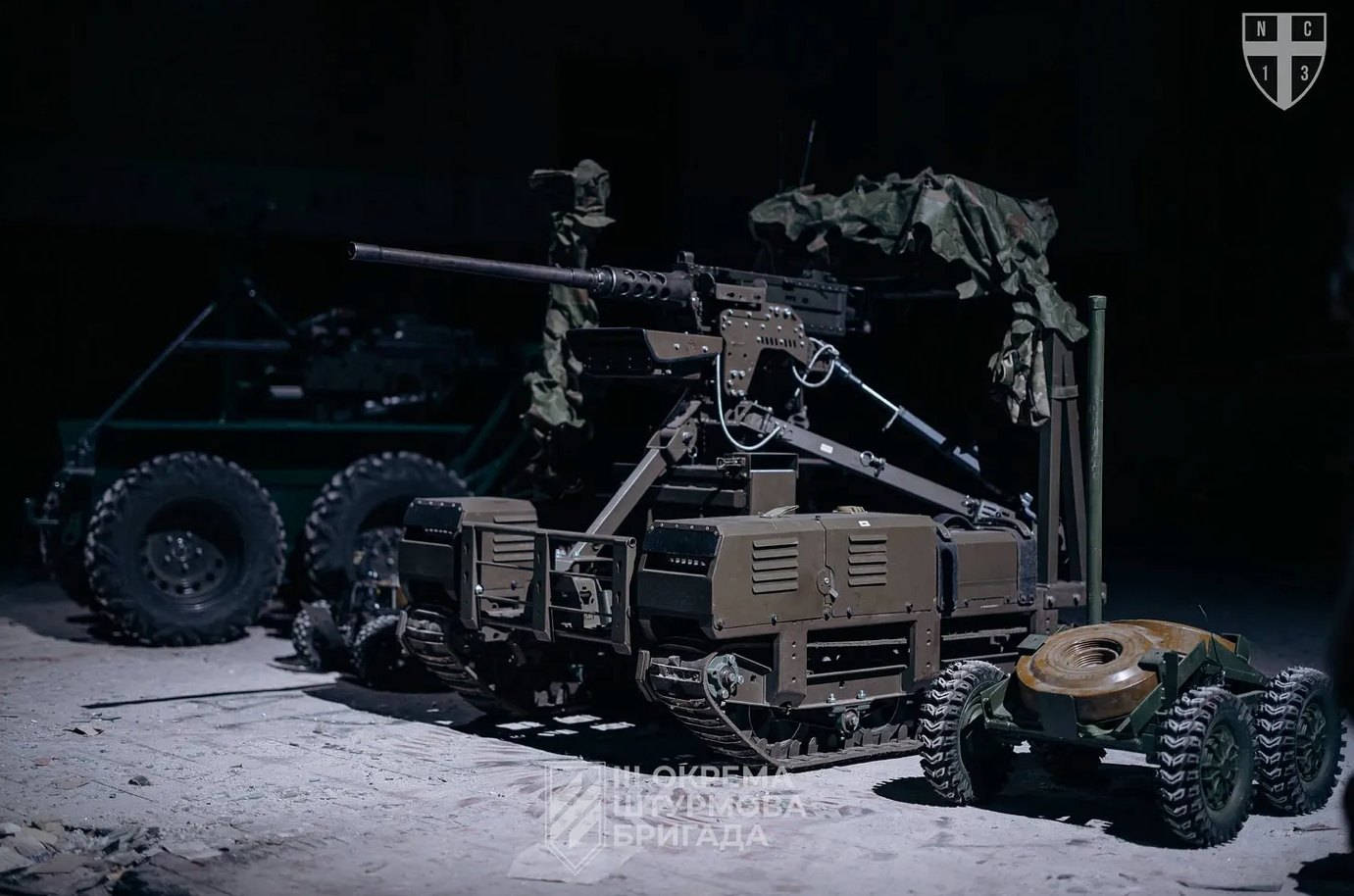
These battlefield robots, called UGVs for Unmanned Ground Vehicles, are capable of tackling a variety of support missions, such as transportation, logistics, and medical evacuation. They are also able to conduct strike operations, sabotage, assault, and terminating with extreme prejudice scores of enemy personnel.
This is the hallmark of Operation Vivaldi: unmanned technologies are increasingly being deployed to perform some of the most complex and dangerous tasks, allowing human soldiers to take on more specialized roles and enter combat at later stages of operations, with humans remaining at the heart of robotic fighting.
The NC-13 Strike UGV Unit of the 3rd Separate Assault Brigade is one such unit, employing exclusively Ukrainian drones. It takes a massive amount of battlefield innovation and the personal fighting experience of Ukrainians on the frontlines, to be able to develop, integrate, combine, and optimize such systems so they actually work on the battlefield. This has nothing to do with weaponry developed by primes over remote contracts, with much stock market hype but little fighting experience on the side of developers, weaponry which might eventually fail under the harsh conditions of a battlefield. And that makes the whole difference.
Dressed to kill
As reported by Olena Kryzhanivska, Ukraine has significantly increased its use of UGVs in 2026 alone, carrying out more than 100,000 evacuation missions, in addition to strike operations. And they're pretty good at baiting, confusing, and terminating enemy personnel.
During Operation Vivaldi, a Ukrainian UGV equipped with a machine gun positioned itself between two tree lines occupied by Russian troops. The UGV opened fire on one Russian position and then the other. Believing they were being attacked by Ukrainian forces from opposite directions, the Russian soldiers began firing at each other.
In Ukraine, a heavy-lift drone transported a UGV-kamikaze behind Russian positions. The UGV was able to cross a route littered with mines and unexploded ordnance and reach a shelter occupied by Russian troops, destroying the shelter and terminating all personnel inside.
A percolating UGV ecosystem
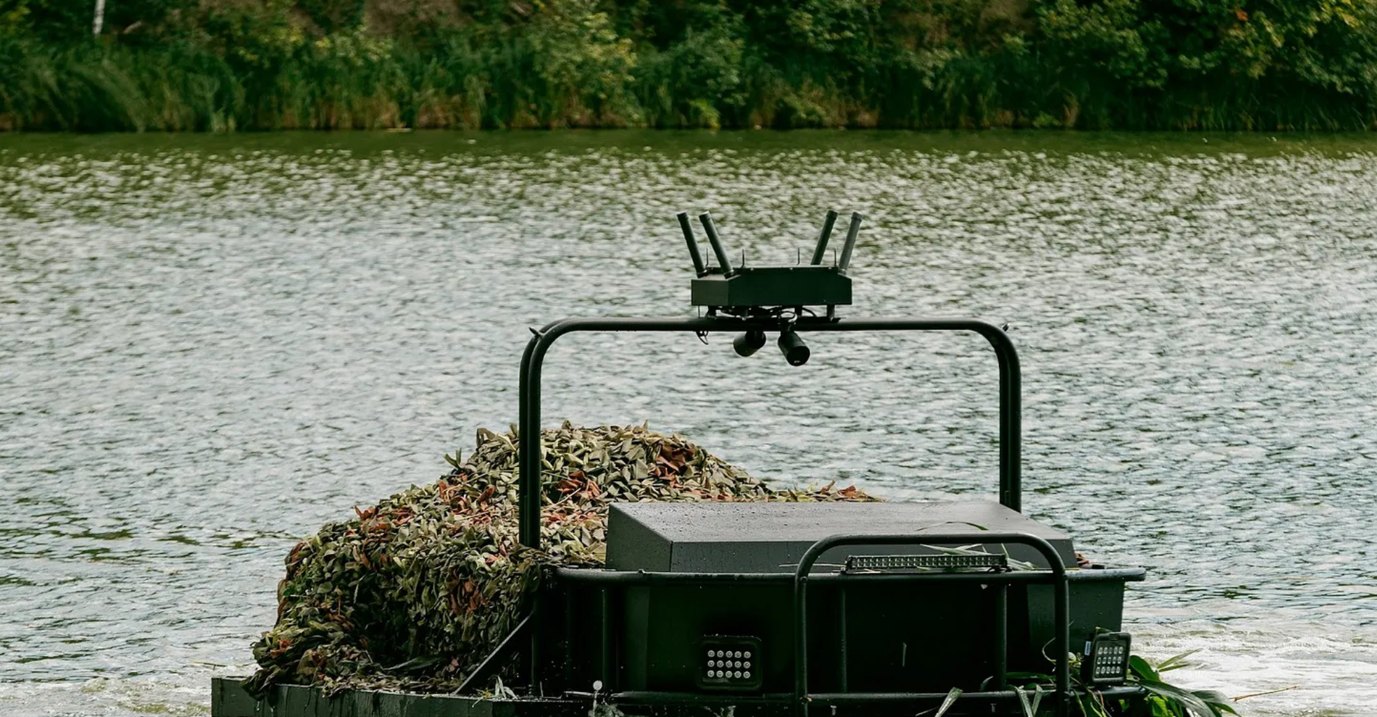
In Ukraine, a country of rivers, amphibious drones are on the rise. As further reported by Olena Kryzhanivska, a dynamic UGV ecosystem has emerged in Ukraine.
"Toni" is a Ukrainian defence startup amphibious UGV, in the process of improving its speed and range. Designed for logistics, evacuation, and special missions on both land and water, carrying payloads of up to 380 kg on land and 280 kg on water, Toni reaches a maximum speed of 13 km/h on land and 2–4 km/h on water, with an operational range of up to 50 km on land and 5 km on water at 50% battery charge.
"Robonoshi" by Ukrainian company ARMOLAB successfully transporting a man weighing 170 kg. Robonoshi is designed for medical evacuation, replacing the manual carrying of wounded personnel, and can also support missions.
As for the "Tencore Ecosystem", a system of UGVs and related technologies, it consists of four classes of robotic platforms and an AI-powered autonomous navigation module. The Tencore Ecosystem includes the tracked TerMIT UGV, equipped with modules for logistics, medical evacuation, mine-laying, and combat missions. It also features the TOR 4×4 wheeled UGV with armoured wheels, the MAT1LDA 8×8 amphibious unmanned platform by NODRICS, capable of crossing water obstacles, and the TRAX UTILITY firefighting and rescue robot.
The DELTA System
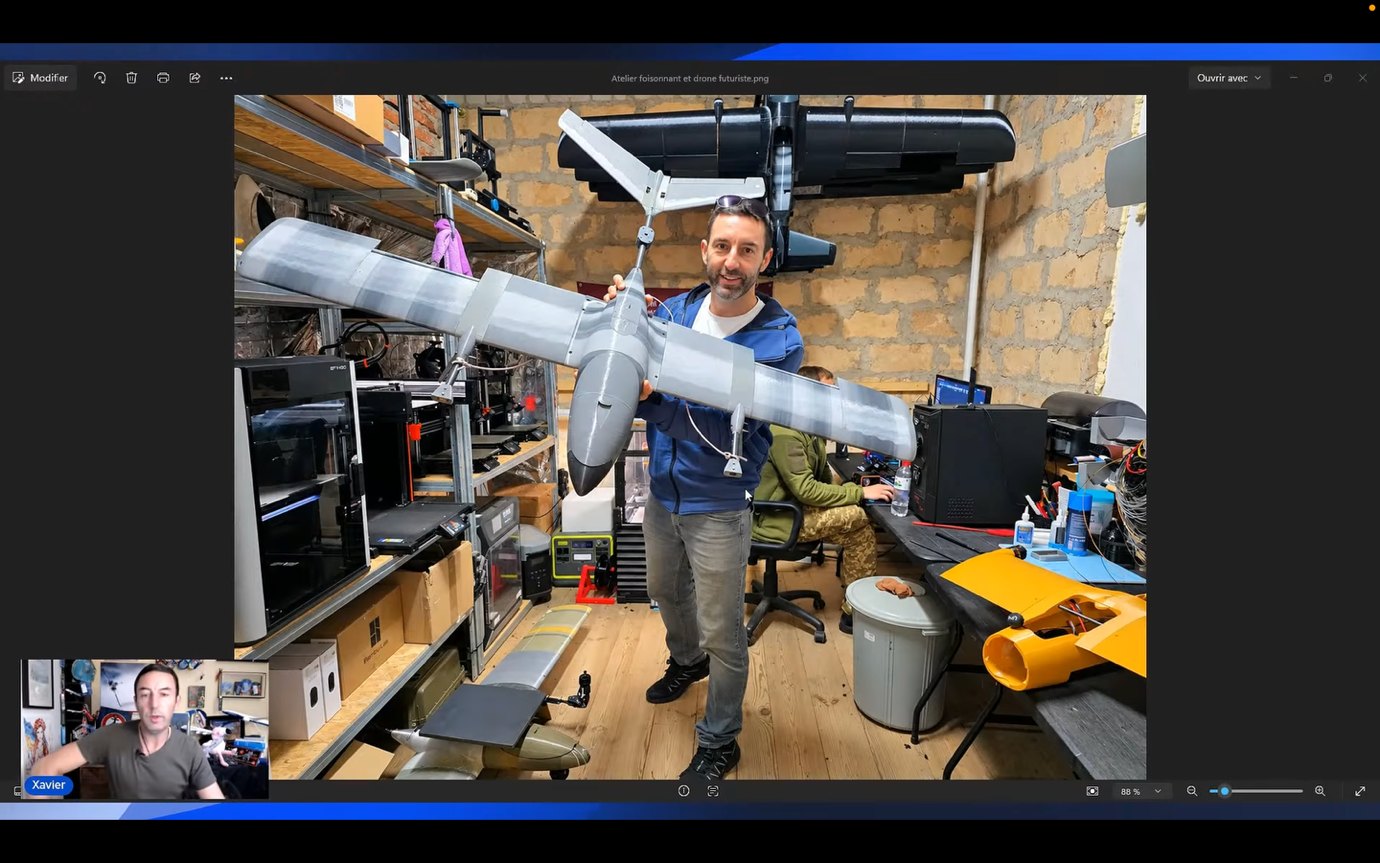
As reported by Xavier Tytelman, who spent September 2026 on the Ukrainian frontlines, Operation Vivaldi required a year of preparation: infiltrators, partisans, novel Electronic Warfare (EW) systems blinding Russian observation drones, Baba Yaga drones delivering robots, and UGVs, contributed to push back Russian forces and induced the enemy to thin other sectors.
The production of UGVs handling about 80% of logistics required forward 3D printing, enabling distributed, decentralized production UGVs anywhere relevant, avoiding a single point of production failure, and exposed, unpractical, and costly transportation arteries. An ambitious yearly production target of 100,000 robots in 2026 won't be met, but battlefield drones numbers are getting closer in the mutiple tens of thousands.
But none of that would work on the battlefield without the ubiquitous DELTA System.
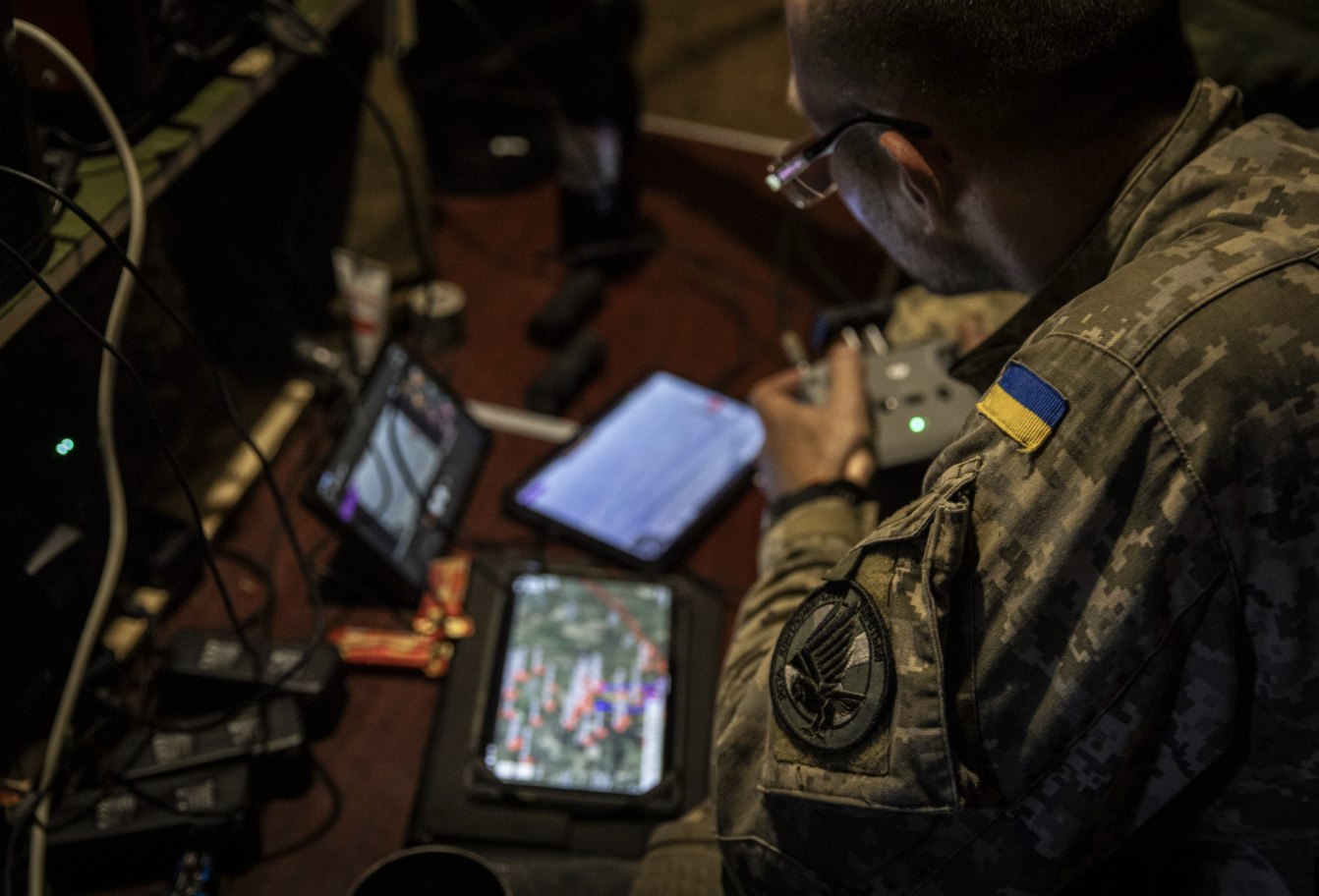
DELTA is Ukraine's cloud-based situational awareness and combat management system. Developed by Aerorozvidka and the Ministry of Defense, it functions like a real-time digital map for war, cutting the targeting kill chain from 20 minutes down to 3 to 5 minutes. Its core functions consist in data fusion, AI target detection, and multi-domain control. A Ukrainian command center running on DELTA is a clear window of future combat operations happening right now.
Data fusion combines live feeds from commercial and military drones, satellite imagery, radio intercepts, and ground sensors into a single shared map. AI target detection uses integrated modules like Vezha and Avengers to automatically scan video streams and spot enemy hardware in seconds. Multi-domain control consists in coordinating air, land, sea, and underwater drones across tablets, laptops, and smartphones used by front-line troops and commanders.
The impact on the battlefield is massive. DELTA enables to coordinate thousands of much faster daily strikes against Russian equipment and personnel. DELTA played a central role in the defense of Kyiv, the strike on the Black Sea Fleet, and the liberation of Zmiinyi Island and Kherson. Certified to NATO standards (such as STANAG 4817 and Link 16), DELTA demonstrates advanced all-domain data sharing during alliance exercises like CWIX, for current and future conflicts with Russia.

Satellite security
But what if the security of Ukraine-supporting satellites is compromised? For connectivity, it appears easier and less costly for the enemy to act at ground level first rather than targeting satellites, by jamming communications and cyber-attacking ground stations. But for GEOINT and ISR, compromising orbital assets is on the menu.
Russian satellite Cosmos 2612 has been manoeuvering less than 100 feet away from the U.S.-registered, Finland-operated ICEYE X-36 SAR satellite on an orbital mission to support Ukraine. This incident, more concerning than routine RPOs (Rendezvous and Proximity Operations), was initially outed by the Center for Strategic and International Studies (CSIS), the previous week.
Clayton Swope, Deputy Director, CSIS Aerospace Security Project, and Chantal Li, Research Assistant for the Project, warned that Russia may be preparing to deploy an on-orbit counterspace weapon or conduct a hostile operation. "No one should assume to know what Russia will do next with Cosmos 2612, but the potential for a threat is there. Washington and its allies may think that hostile actions targeting a Western satellite would be highly escalatory—but Moscow may be willing to take that risk, believing the West will not respond forcefully."
Swope and Li further highlighted Russia's history of testing counterspace weapons and its stance that commercial space assets assisting Ukraine are legitimate military targets, urging the establishment of a unified deterrence strategy. "Russia may see little risk of escalation, a belief that is reflected across Russian actions in Europe. The United States and Europe must respond assertively if Russia makes a hostile act against another nation's satellite."
Lt. Gen. John Shaw, former Deputy Commander, U.S. Space Command, told Ars Technica getting so close to a US-owned satellite with military utility was a provocation. "So far, the best interpretation of the Russian activity is clear messaging that they will intentionally conduct aggressive activity near platforms they perceive as actual or potential threats to their interests. A broader point is the acknowledgment this activity in the space domain is not at all different from what we often see Russia conduct in the other domains—close-in aggressive and provocative behavior."
Satellite tracking website Orbital Radar showed that at their closest point, the two objects had an estimated "miss distance" of about 85 feet, "stoking fears of space warfare." Adam Cohen, an engineer with the U.S. Space Force and a founder of Orbital Engineering Lab, used OEL to create visualizations posted on X here and here.
Such a close encounter is exceedingly rare and highly dangerous. This week, CSIS further hosted the virtual discussion, "A Close Encounter in Space: What Is Russia Planning? | Space Strategic Dialogue", featuring Greg Gillinger, Senior Vice President of Strategy & Development at Integrity ISR, and Clayton Swope. The conversation, moderated by Kari Bingen, Director of the CSIS Aerospace Security Project, aimed to explore what the tracking data reveal, the potential risks to the ICEYE satellite, and options for deterring and responding to hostile actions in space.
There is no easy answer to that, especially if you consider this incident within the broader context of the current relationship between Russia and the U.S. administration, and how Russian interests could be threatened or leverage elsewhere. The only sure thing at this stage is that more approaches by Russian Cosmos satellites against another U.S./Finland satellite (ICEYE X-37) seem quite probable in the coming weeks.
Connectivity politics
Russia "will be able to control missiles and UAVs in real-time across all of Ukraine, with full satellite coverage expected in approximately six months." This is according to Presidential Advisor Serhiy "Flash," who described the development as a major catastrophe for everyone. If proven accurate, it will also have repercussions all over Europe, beyond the Eastern flank.
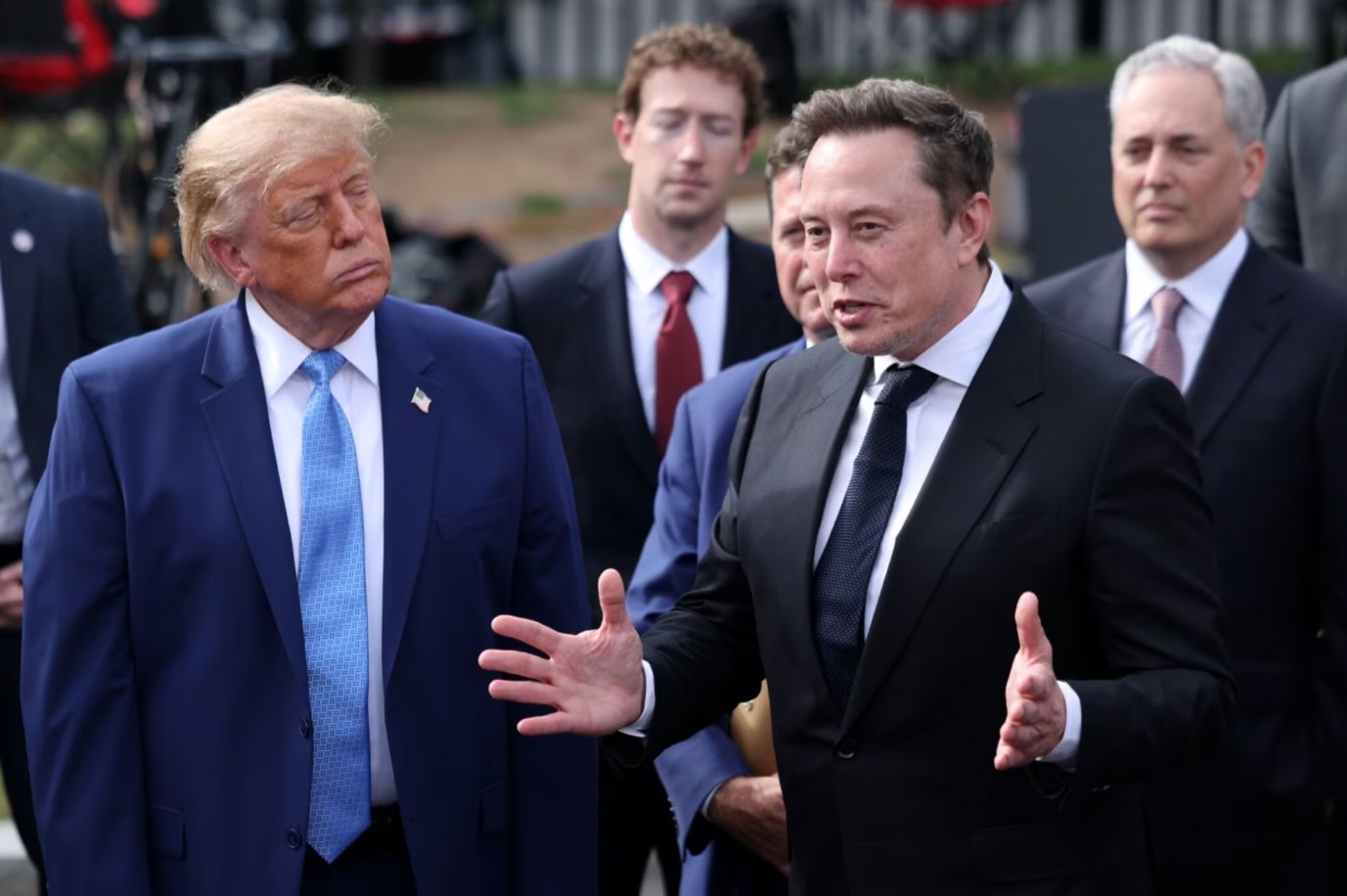
Both Wall Street Journal and Bloomberg reported that Musk is the culprit who ordered the Starlink / Starshield slowdown that blindsided Ukraine. This counts as update of the section "Not so plausible deniability" in our previous article covering the restricted access to Starshield at speed, where we covered the political and technical conditions for Ukraine to secure the level of existential connectivity it requires to maintain its performance on the battlefield.
Meanwhile, U.S. Senators were demanding answers about what caused the disruptions and what consequences they had, also raising concerns about "glitches" that affected intelligence sharing and early missile warning. Four Democratic senators sent a letter to SpaceX, demanding that the company explain what role, if any, it had in the outages, which it had denied (later counter-denied by Secretary of State Marco Rubio). The letter to Christopher Cardaci, VP of legal at SpaceX, asked what restrictions were put enacted during the three day time period this month, who made or was notified about those decisions, and who has the power to revoke or restrike Starlink access in Ukraine.
Rep. Mike Turner (R-OH) called for Congress to investigate the outages. A bipartisan group of nine senators who sent a letter to the Pentagon's inspector general, expressed "grave concern" over the Starlink disruptions in Ukraine, including reports that American personnel could not reach safety during attacks because of the comms breakdown. The senators also called for Ukrainian military operations to receive the unlimited Starlink speeds that were originally promised. The senators asked the IG to determine if the disruptions impacted whether American personnel were able to shelter amid the Russian attacks, if the US government knew about or approved the reported slowdowns, and whether they were driven by SpaceX, what caused the speed restrictions —including policy decisions, or technical problems, and what DoD is doing to make sure Americans remain safe and receive adequate missile-warning info going forward.
"The United States government has a fundamental obligation to protect American personnel serving overseas," the senators wrote. "The possibility that American personnel were endangered by preventable disruptions, inadequate coordination, or decisions made by their own government demands immediate scrutiny and accountability."
But at the same time, US currently threatens EU with severe retaliation over proposed Starlink restrictions. As reported by the Financial Times, Ambassador Andrew Puzder warns about 'devastating' retaliation if Brussels goes ahead with plans to limit spectrum access for non-EU companies.
With allies like that, who needs enemies.
AI, cyber, and cognitive security
AI, cyber, and cognitive security concerns previously assessed and analysed in this publication, remain relevant to the Ukrainian battlefield and the reliance on systems like DELTA.
As established by NESSA, and based on hard-earned frontline experience, onboard-AI turns satellites from sensors into decision-makers, and decision-making itself becomes part of the attack surface. Decision integrity, AI-specific indicators of compromise, manipulated inputs, and other parameters constitute what SOC teams may need to collect to investigate incidents in an AI-enabled spacecraft.
Further, in a space that is increasingly crowded, contested, and central to military operations, making cyber resilience a mission-critical requirement rather than an optional safeguard, operators and battlefield commanders will need to tackle what this evolving threat landscape means for space cybersecurity.
Battlefield lessons
On the Ukrainian battlefield, there is one clear-cut kill-chain: sense → connect → decide → strike → assess → adapt. Space, cyber, and AI are layers of it, and Electronic Warfare is its connective tissue.
Proliferated LEO connectivity, non-dependency over one sole link, one whimsical "ally," and one treacherous "provider," is the way to go. Delta fusion, onboard autonomy and 3D mapping for GPS-denied navigation, AI-guided FPVs and UGVs and forward, decentralised production, are the crucial components. They allow Ukraine to cope with the key vulnerabilities of single-provider dependence, C2 and data-lake compromise, terminal jamming, ground-segment and grid attacks (remember the 2022 opening Russian attack on Viasat).
Russia's vulnerabilities until now were no Starlink-class capability, thin AI experience, observation blindness once drone ISR is suppressed, and self-damaging counterspace options. Make no mistake: Russia will have closed the AI gap six-months from now, and most likely dealt with other weaknesses, with game-changing consequences not only for Ukraine but the whole of Europe and NATO.
Further, even with multi-orbit and multi-provider architectures, hardened satellites, non-kinetic counterspace, edge AI, attritable systems, and wartime service guarantees, commercial assets in orbit have de facto become legitimate targets, with spillover and potentially lots of debris.
Getting ready
Uplink-free AI swarms, adversarial ML and data poisoning, AI-accelerated cyber and cognitive EW, sensor-to-shooter compression, ground-segment targeting, deepfake-driven information warfare, and governance gaps, will continue to tip the battlefield balance against our joint Ukrainian-European interests and security.
Europeans must constantly monitor, improvise, adapt, prepare, and overcome. This is an existential joint-responsibility for the survival of the western end of the Eurasian continental plate. Responsible European states should accelerate autonomous weaponry production and tech edge battlefield dominance, and get ready.
Not ready for the previous conflicts or Cold War (which never really ended), but for the current on-going hot war, and for those to come afterward, potentially even hotter. And that preparation includes relevant tabletop exercises and hackatons, meshing space with cybersecurity and AI. This time around, wargames are for real.
This is not a drill.
Post-scriptum: at the time of editing, ICEYE, the European leader in sovereign intelligence from space, and Nokia, a global leader in connectivity infrastructure, have just signed a Letter of Intent with The Ministry of Defence of Ukraine, to explore cooperation in space. The partnership aims to support Ukraine's defense capabilities, particularly in building sovereign satellite communications. The shared intent was announced on 22 October 2026 during the visit of the Prime Minister of Finland to Ukraine. Europe is getting organised.
ICEYE press release: https://www.iceye.com/newsroom/press-releases/iceye-and-nokia-partner-with-the-ministry-of-defence-of-ukraine-to-develop-sovereign-satcom-capability
Author: Christophe Bosquillon MSc, MBA, Founder & Director, Senior Fellow, NIDS - National Institute for Deterrence Studies (U.S.), Fellow, EIPIO – European Institute of Professional Intelligence Officers