
The White House pulled the battlefield connectivity rug from under Ukraine’s feet. Europe is responsible too.
Following a dubious diesel deal with Russia, the White House severely restricted access by Ukrainian forces to Starshield, paralyzing drones guidance above a +/- 120km/hour speed. Regardless of the backlash on the U.S. side, this shows yet another blatant weakness of Europe in defending her neighborhood and ultimately herself. Read an exclusive opinion piece by Christophe Bosquillon.
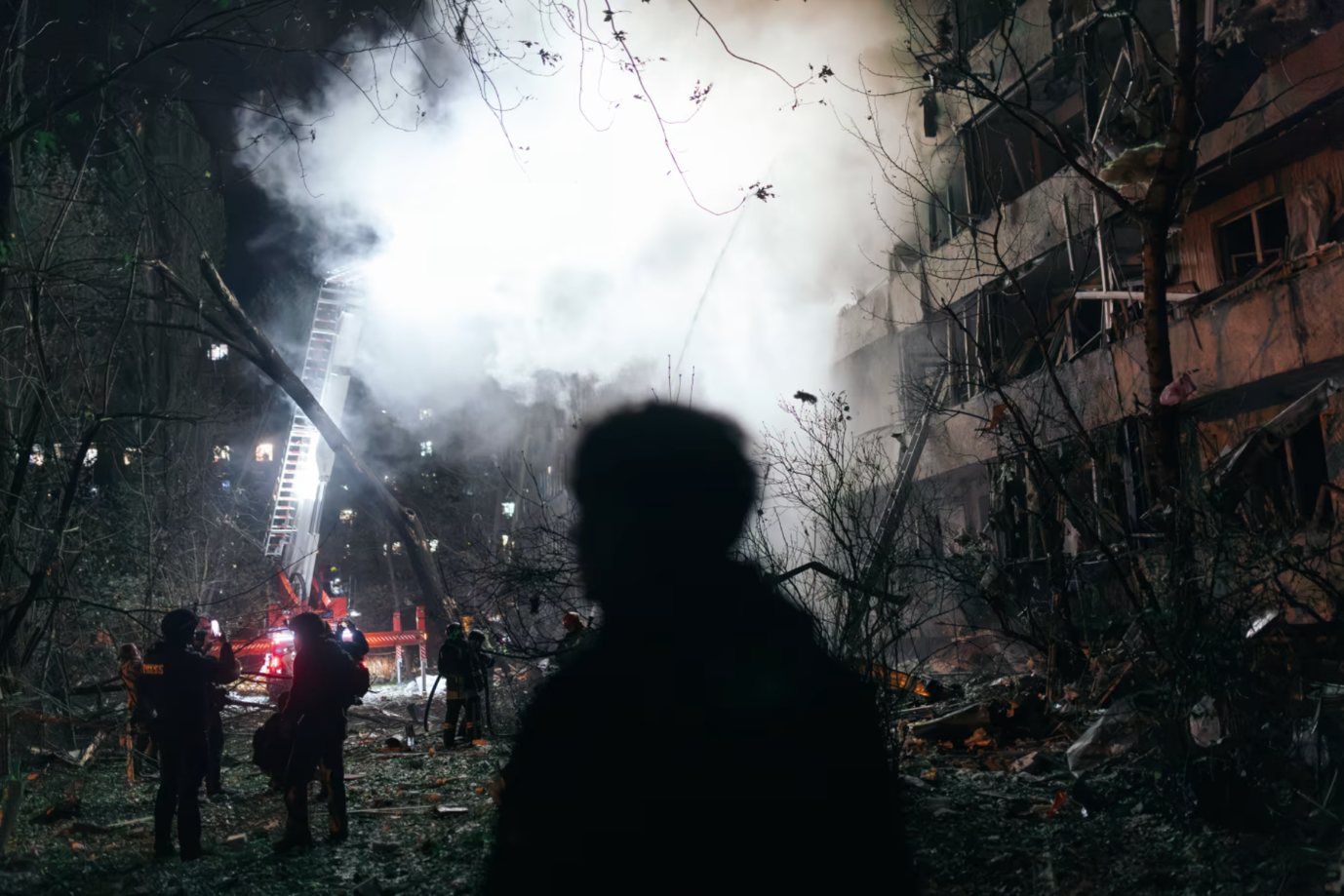
Putin forces in Ukraine recently reinforced the Huliaipole axis, as Moscow seeks to occupy the left-bank part of Zaporizhzhia Oblast. The Russians are pushing their force advantage at 4:1 across the axis and up to 7:1 in the most threatened sectors.
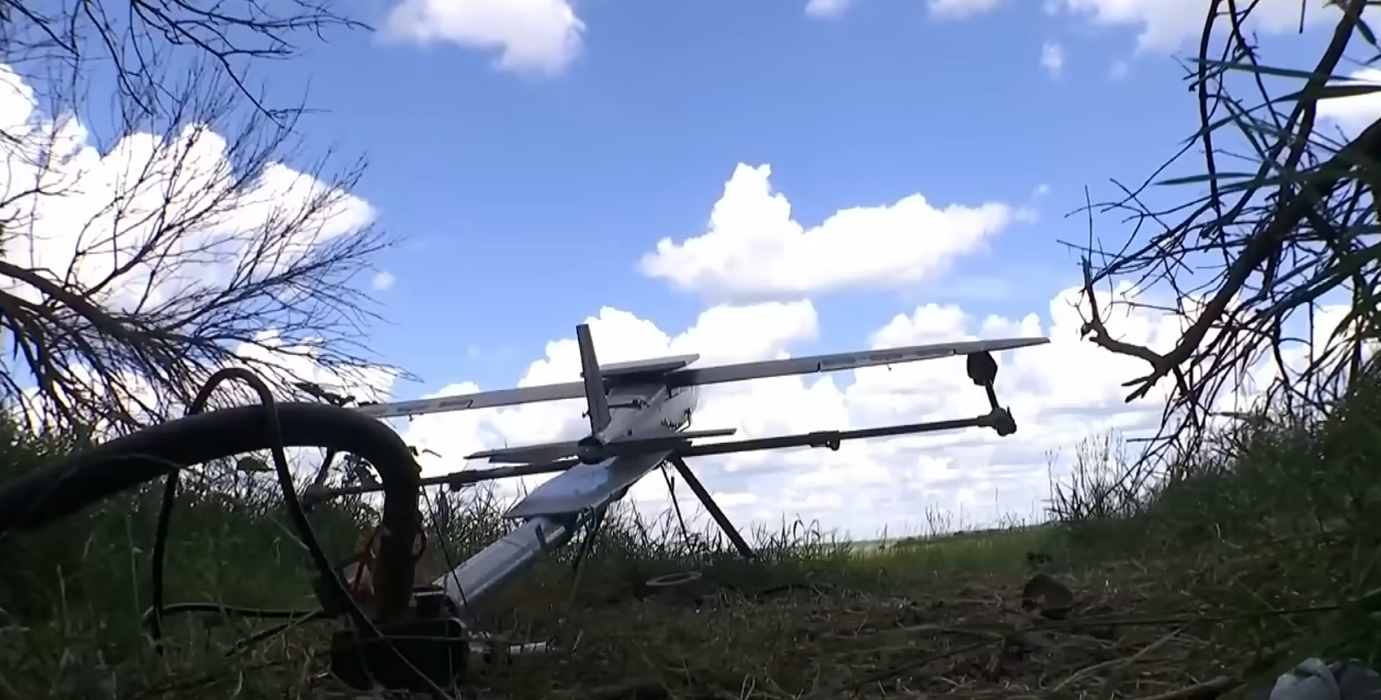
Three Rubicon drone units were rotating through the area, while infiltration remained Russia’s main tactic and armored vehicle use was minimal. Ukrainian intelligence assesses that Russia is seeking to create conditions for advancing toward Zaporizhzhia and blockading the regional capital, making it vital for Ukrainian forces to disrupt Russian logistics.
Clueless and flabbergasted
However, on the night of 13–14 October 2026, Ukrainian drone operators on the Huliaipole axis got a nasty surprise: the drone link went out for 10–20 seconds every time it accelerated beyond 110–120 km/h. Nobody was jamming that link, and nobody had damaged the terminal.
Meanwhile in the U.S., in the early hours of Wednesday 14 morning, as reported by the Wall Street Journal, “Denys Sienik, the top Ukrainian diplomat in Washington, D.C., sent a frantic message to U.S. lawmakers: Ukraine was suddenly facing restrictions on its military-grade Starlink terminals, and he didn’t know why. The change, Sienik warned, would give Russia an upper hand in the war and make it tougher for Kyiv to intercept strikes against Ukrainian civilians.”
The truth eventually emerged. The provider, SpaceX, had, without warning, changed the rules of access to Starshield, the military segment of Starlink, which is under direct U.S. government control. Some missions had to be cancelled, making the Ukrainian side even more vulnerable, and Europeans, as usual, clueless and flabbergasted.
The root cause
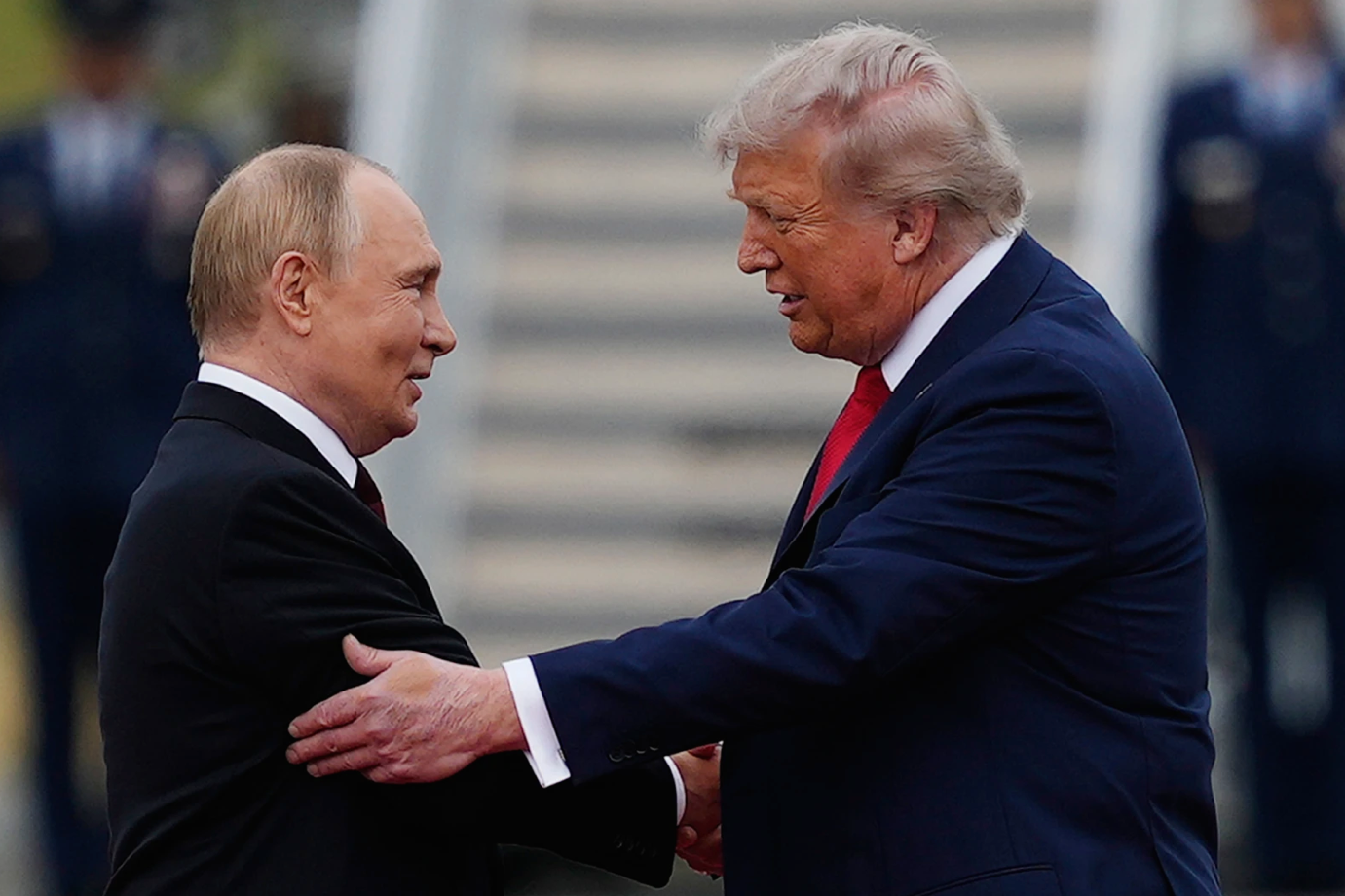
The reality behind all this, is that the current U.S. administration made a diesel export deal with President Putin, so that Russia would supply the global market with 4.8 million metric tons, or nearly 36 million barrels total, which, as a slight collateral damage, will generate billions of $ in revenues to support Russia’s war againt Ukraine and ultimately against Europe. The idea behind this genius diesel deal is that it would “lower the price at the pump.”
However, the only problem with that deal is that the math doesn’t add up. This is equivalent to about 10 days of U.S. domestic demand or a little more than a single day of global demand. According to Andy Lipow, president of Lipow Oil Associates, the U.S., as a net diesel exporter, doesn’t need Russian supply.
Goldman Sachs estimates the initial Russian release would only reduce wholesale diesel prices by $1 to $2 per barrel. That means virtually zero impact for voters, thus unlikely to reverse their choice at the upcoming midterm ballot box. This smells of desperation, not long after a Xi Jinping summit with mixed outcomes.
The last dot remaining to connect then, is that the Russian government demanded, as trade-off, or quid pro quo, that Ukrainian access to Starshield be severly restricted, so as to prevent certain defensive and offensive operations by Ukrainian forces.
At the time of editing, it had already been confirmed by Reuters that the order came from inside the White House. Officially the disconnection should happen at speed higher than 100 miles or 160 km per hour, but, as reported on the ground, disconnection happens at 110-120 km per hour already.
Governance by chaos
On 25 September 2026, POTUS had announced he was blocking $810M in government funding that Congress had already approved. The cuts, known as a pocket rescission, occur when a president asks Congress to cancel federal funding so close to the end of the fiscal year that the money expires before lawmakers can review the request.
Congressional Quarterly wrote at the time, "The coming cancellation threatens to escalate tensions over spending after the coming midterms elections." That would likely include the Administration's $1.5T defense budget.
As reported by the Wall Street Journal, severely restricting Ukrainian access to Starshield led to "a widening rift in the Republican Party over Trump’s foreign policy ahead of the midterm elections." Rep. Brian Fitzpatrick (R-PA) said, "If we start going dark on Ukraine there will be consequences, mark my words." According to the Journal, "Asked what consequences he meant, Fitzpatrick said Congress could hold up funding for any federal agencies that are responsible. Agencies won’t get funding if they’re not doing their jobs,” he said. Based on his comments, this Ukraine situation increases the risk of continued congressional gridlock over defense appropriations.
As further reported by the daily NewSpace Sadler report, Rep. Don Bacon (R-NE), member, HASC, also reacted to this news on Wednesday 14 October, tweeting, "Their agenda is dead unless they change paths" reacting to what he sees has reduced intelligence support to Ukraine.
The Hill wrote the whole thing is "adding to tensions between President Trump and Senate Republicans." In a video statement, David Sanger, the New York Times’ national security and White House correspondent, brought the receipts on why Trump’s diesel deal with Russia had resulted in a “pretty confused policy” since it conflates diesel export to feed the Russian war coffers with a longstanding policy of sanctions.
There is something called the Chernobyl sarcophagus (officially, the Object Shelter or Shelter Object), which is a massive steel and concrete structure built to cover the destroyed Reactor 4 at the Chernobyl Nuclear Power Plant in Ukraine.
It is clear that for some Senate Republicans, even that kind of confinement couldn’t contain the increasingly radioactive character of their affiliation to POTUS, and that will be an issue at the midterm and for the rest of their political careers.
As for President Volodymyr Zelensky, he would have none of this nonsense, and declared that he would no longer abide by Trump’s demand that Ukraine stop striking Russian oil refineries. “The block [on attacking refineries] is out. We’re done,” he told the Financial Times.
President Vladimir V. Putin is “real evil,” he added. “How can Trump be friends with him?” This is a great question. If someone had been busy earning their Tovarisch Krasnov call sign and bona fide credentials serving the interests of the regime in Moscow, that might have done it. Everyone witnessing this deplorable situation wishes they knew exactly what’s what.
Not so plausible deniability
Meanwhile, Musk, busy as usual on his X account on a variety of issues from Tesla to GrokAI, made a point to exonerate himself and SpaceX / Starlink / Starshield from any political, legal, and moral liability in this situation: "Starshield systems are owned and controlled by the US government. Any limits on speed or usage are decided by the US military and ultimately POTUS. Starlink is a commercial service owned and controlled by SpaceX. Usage of Starlink is limited to civilian or defensive activities and cannot be used for offensive military action, as doing so would be inappropriate for a commercial company."
To dissipate any remaining ambiguity on his political positions though, Musk tweeted again "And so the slaughter continues … Time for Zelensky to go." And the great thing about that is, Alternative für Deutschland, or AfD, the notorious German far right party, totally agrees with Musk.
In fact, Musk has vehemently supported on X the candidacy of AfD leader Alice Weidel, and her recent victory in the Land Sachsen-Anhalt (formally, Staat Sachsen-Anhalt), or Saxony-Anhalt lander in English. Achtung bitte, comb your moustache and rehearse your Nazi salute.
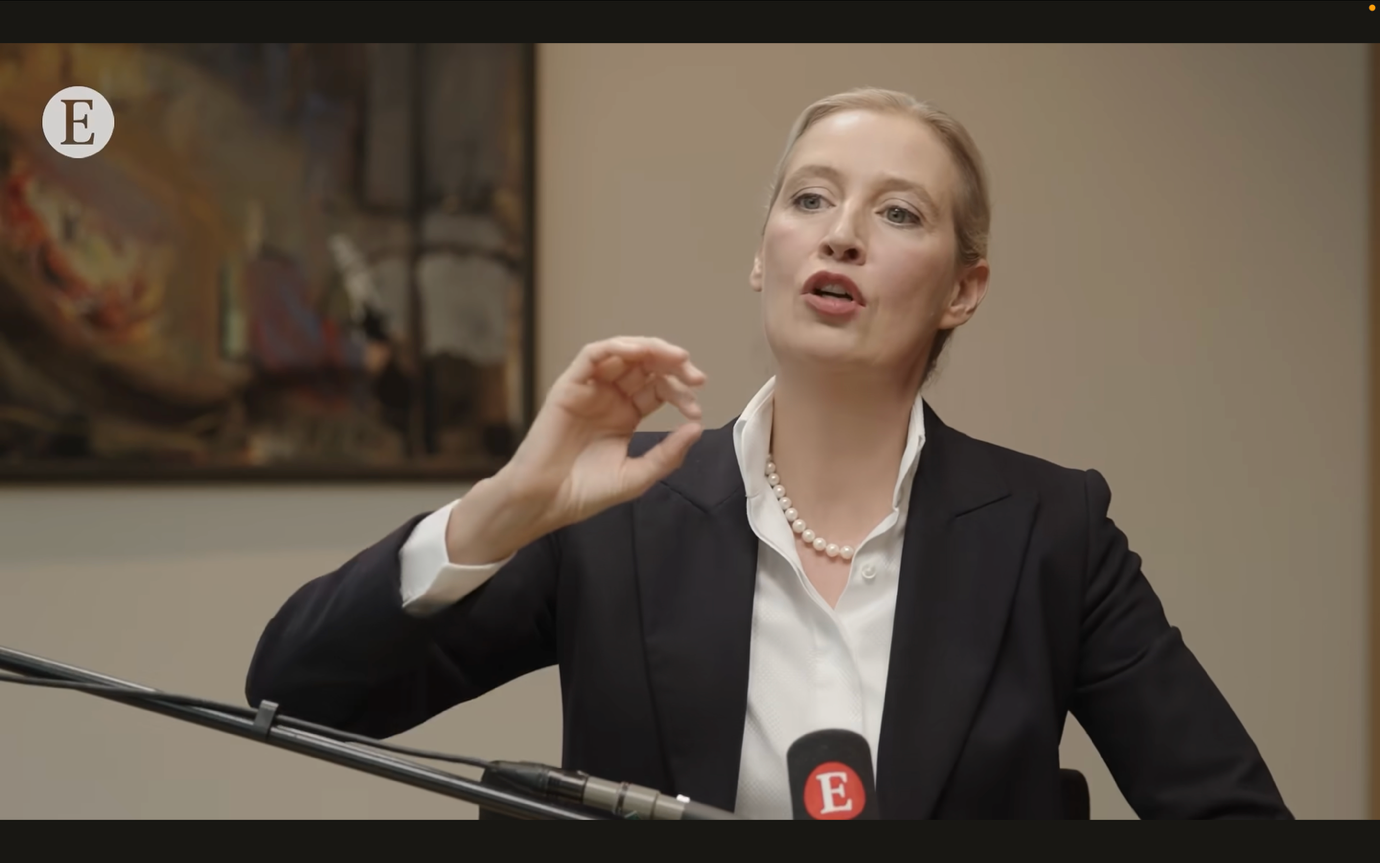
And what did Alice Weidel say to Zanny Minton Beddoes, in an interview with The Economist’s editor-in-chief? If in power, the AfD would stop German support to Ukraine. Germany should stop financing an “already lost war” in Ukraine. Weidel argues that “peace requires taking Russia’s security interests into account, that Europe is heading for a bond-market crisis and that Syrians, Afghans - and eventually Ukrainians - have to leave Germany.” Ah, and for good measure, submit yourself again to the absolute dependency over Russian gas, and just make sure the cattle trains leave on time, yaaaa!!
Decades ago, the Yahoo management got flagged for providing Beijing with the data Yahoo held on several Chinese dissidents. These recent events directly affecting Ukraine and Europe indicate that some Tech Bros haven’t learned that lesson either. They still display the moral integrity backbone of a cockroach and the geopolitical acumen of a tadpole trying to get out of an egg.
So what are the European alternatives?
In a comprehesive LinkedIn post, Oleksii Fokardi drew the list of alternative European providers. As Fokardi notes, there is currently no direct, 100% tactical-level equivalent in Europe in terms of terminal accessibility and compactness (a key practical aspect for drone on-boarding) but there is a powerful combination of low-Earth orbit (LEO), medium-Earth orbit (MEO), and geostationary systems that already cover most military needs.
Currently available capabilities revolve around Eutelsat Group / OneWeb (France / United Kingdom) with a low-Earth orbit (LEO) network of over 600 satellites, ensuring low signal latency (ping) and high speeds, already tested in Ukraine; SES / O3b mPOWER (Luxembourg) in medium Earth orbit (MEO), capable of transmitting gigabit-per-beam data streams; HISPASAT / GovSat (Spain / Luxembourg), geostationary (GEO) operators specializing in secure satellite communications for NATO needs in specialized jamming and Electronic Warfare-resistant frequency bands (X-band and military Ka-band); Airbus Defence and Space (France / Germany), whose comprehensive military satellite infrastructure (including the Skynet 5 network) supports secure comms, specialized heavy-duty mobile terminals for military equipment, and integrated tactical SATCOM systems. Ground fiber networks should not be forgotten either.
As for future systems on the 2029-2030 horizon at the earliest, IRIS² (Infrastructure for Resilience, Interconnectivity, and Security by Satellite) is meant to meet the defense and government needs of the EU and its partner countries. Germany is developing its own system independently, within a similar timeline. Too many years away from the on-going war though.
Skylinker goes a step further with MANET which stands for Mobile Ad hoc NETworking. MANET builds upon a decades-old military applications in a self-forming and self-healing network rebuilding its routes on its own when a node drops out. Among the most mature MANET implementations used in Ukraine is a network layer which is transport-agnostic: it does not care which constellation or fiber link a packet came from, as “these are simply different doors out of the same house. (…) Every link becomes shared, and none is the only one.”
For a local position, a terminal might be destroyed but the position is still on comms.The mesh carries connectivity to the forward edge, allowing to back off sensitive hardware to the rear. For a brigade, a link went down but nobody noticed because all terminals, modems and lines are brought together into one managed network with a single map.
And at command level, no single provider is a point of failure for the front. The equipment belongs to the armed forces, the encryption keys stay with the owner, and the point where the network is stitched together can sit on the owner’s own server. That takes away from the (foreign) service provider the leverage of cutting you off their own network like Starshield did.
The condition for this to work is that a network capable of stitching links together must arrive before the new links themselves. Then every new terminal, modem or satellite service immediately adds resilience to the whole unit, instead of becoming yet another island.
Inversely, connectivity built upon dependency on one link alone has built-in its single-point-of-failure, since this service can be cut off any time and without even the slightest warning, as just experience by Ukraine with Starshield.
European politics as usual
What happens today in Ukraine is about to happen over Eastern Europe: Estonia, Latvia, Lithuania, Poland, and Romania are the most exposed countries. But even Western Europe starting with Germany and France is a target of Russian hybrid warfare as we speak, while the Nordic countries are no less threatened. Russia is all over the map, testing NATO’s nerves, counter hybrid-warfare capabilities, political will, and balls size, or lack thereof.
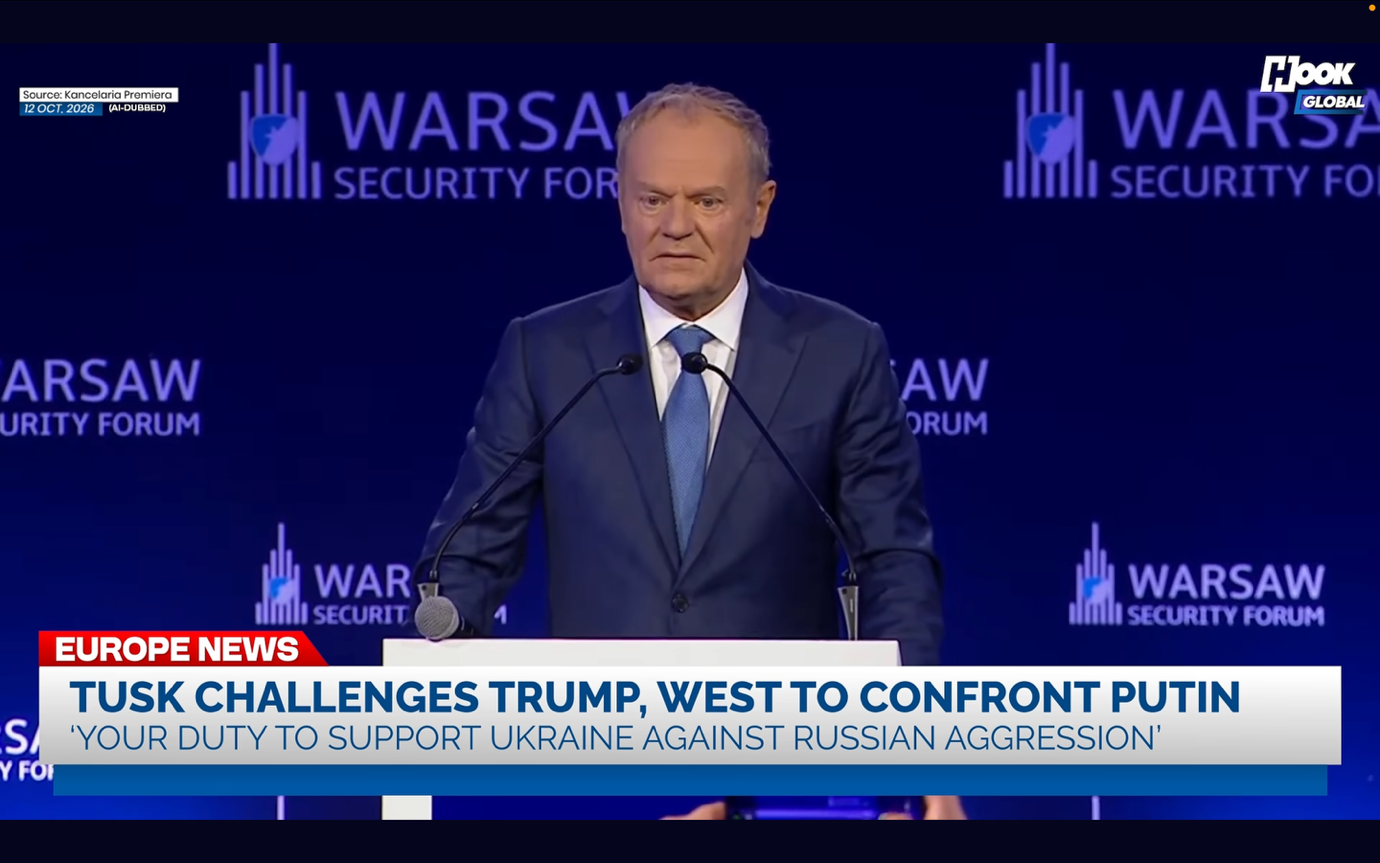
Coincidentally, earlier this same week took place the Warsaw Security Forum in Poland. Polish Prime Minsiter Tusk made a strong intervention in support of Ukraine and about the controversial Trump-Putin deal.
Tusk highlighted the war's human cost and urges tougher sanctions and a stronger deterrence posture, ahead of a European summit in Brussels and in reaction to Trump's proposed energy truce. For Tusk, “politicians on both sides of the Atlantic who cast Ukraine as the problem are mistaken. Supporting Ukraine is a patriotic duty and protects national sovereignty.” Anyone weakening it "for whatever reason, treason, stupidity, money" acts against their own nation.
For Tusk, Moscow seeks to dismantle Europe's security architecture and restore pre-1989 domination. Poland is preparing for multiple scenarios and investing heavily in defence. Russia answered Trump's proposed energy ceasefire with an attack on energy infrastructure in Kyiv.
Tusk reads the attack as proof that Russia wants domination, not de-escalation. Tusk will press partners in Brussels for increased sanctions and a harder deterrence policy, and sends a message from Warsaw to Washington that Ukraine, Poland, and the free world "will not be broken."
Contrary to Musk, Tusk combines a moral and strategic argument. His moral argument is clear. His central strategic claim is that durable peace requires credible deterrence, not concessions. Strengthening Ukraine's defence and raising the cost of aggression may improve the prospects for a settlement, while reduced support will not necessarily bring peace.
Tusk also ties Ukraine's ability to defend itself to the sovereignty of exposed neighbours. On the Trump proposal, he called it "good" and treated it as sincere, yet used Russia's response to argue that outreach to Moscow without pressure fails. This let Tusk distance Poland from the initiative without criticising Washington directly. Smartly played, Prime Minister.
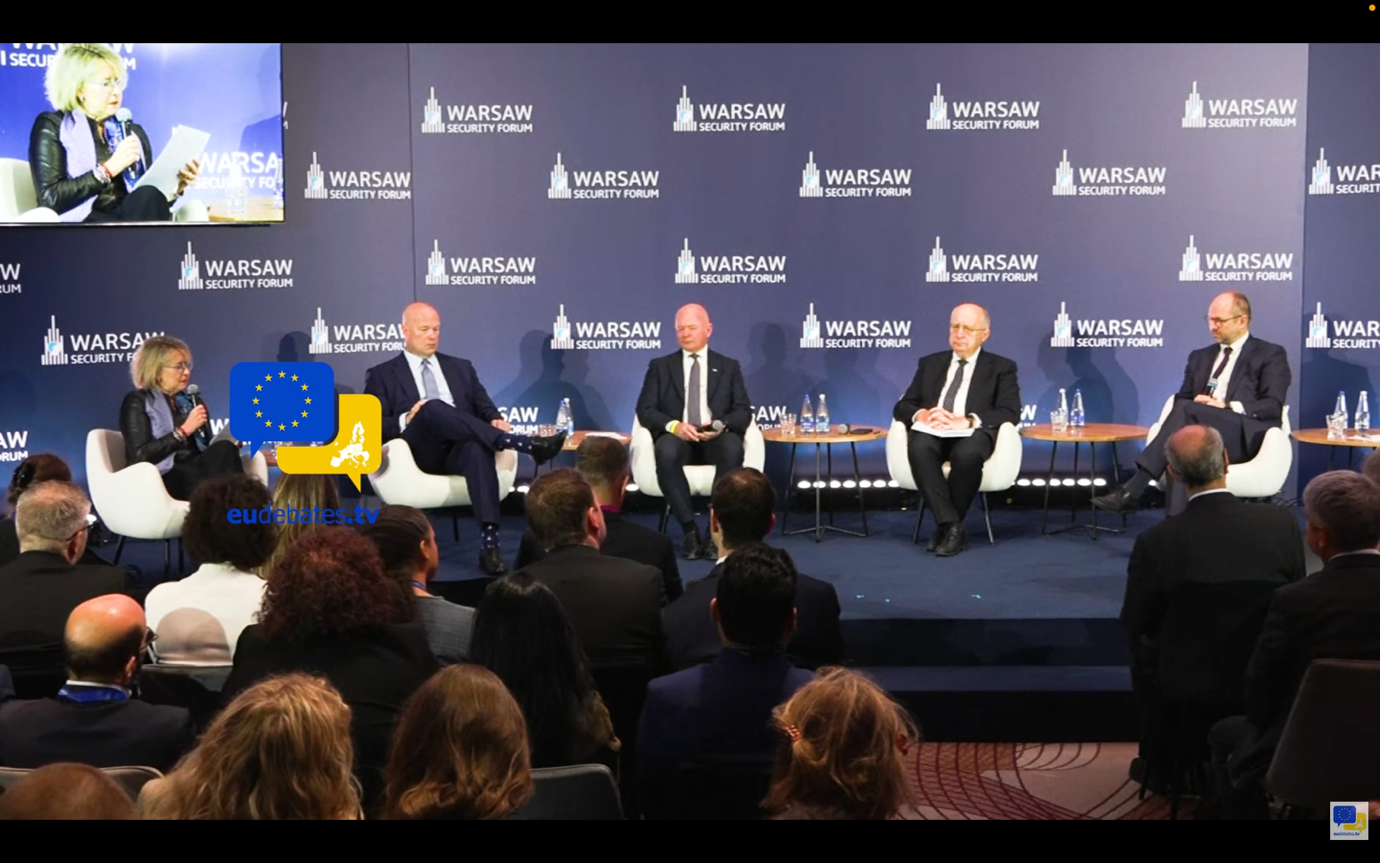
European Commissioner for Defence and Space Andrius Kubilius warned that Europe must become significantly stronger in defence as NATO adapts to a changing global security environment. The panel was named: “NATO 3.0: Keeping the Americans In, the Russians Out, and the EU Up."
The central argument was that Europe must build stronger capabilities, industry and "strategic enablers," including space, to carry more of NATO's burden, while keeping the US presence and nuclear umbrella. A more capable Europe makes NATO stronger, and "NATO 3.0" means rebalancing within the Alliance rather than an American exit. The panel agreed on Ukraine's strategic value, and the importance of space enablers with IRIS² and 2029 as the reference point.
However, the panel was mostly advocacy, not evidence of delivery, on dual-track procurement, joint production, prioritising enablers, and improving mobility. Four points were made though: spending is necessary but insufficient, fragmented industries, uncoordinated procurement and limited production capacity are the real bottlenecks ; autonomy means capacity within NATO, not separation from NATO, continued US engagement and deterrence remain “assumed” ; Brussels frames Europe 3.0 as an EU-led enterprise, Warsaw questions whether the EU should lead on hard security, and Washington stresses benchmarks and burden-shifting ; finally Space is the most consequential item.
As the US pivots to the Indo-Pacific, the panel treats US space enablers as something to be substituted, not merely supplemented. Yet IRIS² is not operational until 2029, launch capacity lags, and the force-posture review adds uncertainty. Kubilius plans a tour of European launch sites and manufacturers.
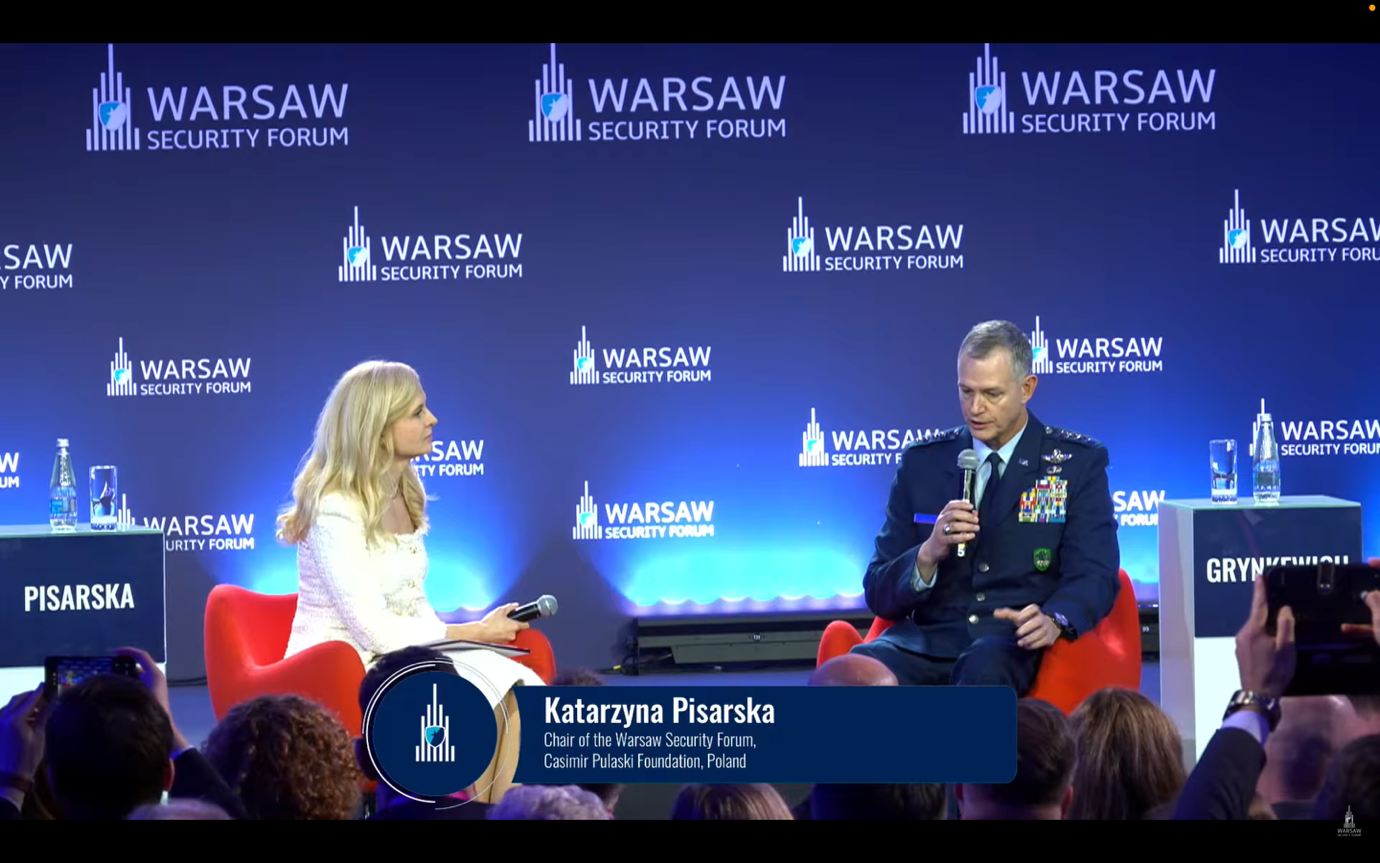
Which leaves us with the main dish, NATO’s Theory of Victory. General Alexus Gregory Grynkewich - Supreme Allied Commander Europe, NATO sat down with moderator Katarzyna Pisarska, Chair of the Warsaw Security Forum, Casimir Pulaski Foundation, Poland, to discuss NATO’s Theory of Victory- answering the question of how do we achieve military success against Russia in deterrence and defence.
NATO's "Theory of Victory" is a denial-based commander's-intent framework for deterring and, if necessary, defeating a Russian attack on Alliance territory. It is tied to DDA, which stands for the Concept for the Deterrence and Defence of the Euro-Atlantic Area, also referred to as the "Deter and Defend" strategy.
It is a common vision rather than an operational plan, and it addresses readiness, lessons from Ukraine and the Middle East, hybrid threats, political cohesion and public reassurance. Based on “Block, Blunt, Break” its aim is a culmination of the attack, not strategic defeat of Russia, which means this limited objective shifts the escalation burden to the aggressor.
Capability lessons from Ukraine and the Middle East suggest affordable mass paired with high-end precision, plus industrial sustainment. The reassurance-and-deterrence rationale requires going public, while attribution plus increased Ukraine support motivates the hybrid response.
Exercises must rehearse electronic warfare and multi-domain conditions, industry needs long-term sustained-output contracts, and hybrid response needs standardised procedures.
This Theory of Victory is a baseline of what NATO wants to be heard among the public. Now, assumptions rest on assertion and what an adversary would challenge. An implementation roadmap means that this conceptual framework will have to translate into procurement, training, interoperability and governance measures.
This Theory of Victory is best understood as a signalling and planning framework whose value depends on implementation. Measurable readiness indicators, realistic exercises, industrial surge capacity, rehearsed political decision-making, and red-teamed escalation assumptions will be required. This Theory of Victory needs to work in practice.
So how do we square all of the above, discussed in Warsaw on 11-12 October, with what happened with Ukraine and Starshield on 13-14 October. The answer is quite simple: we don’t.
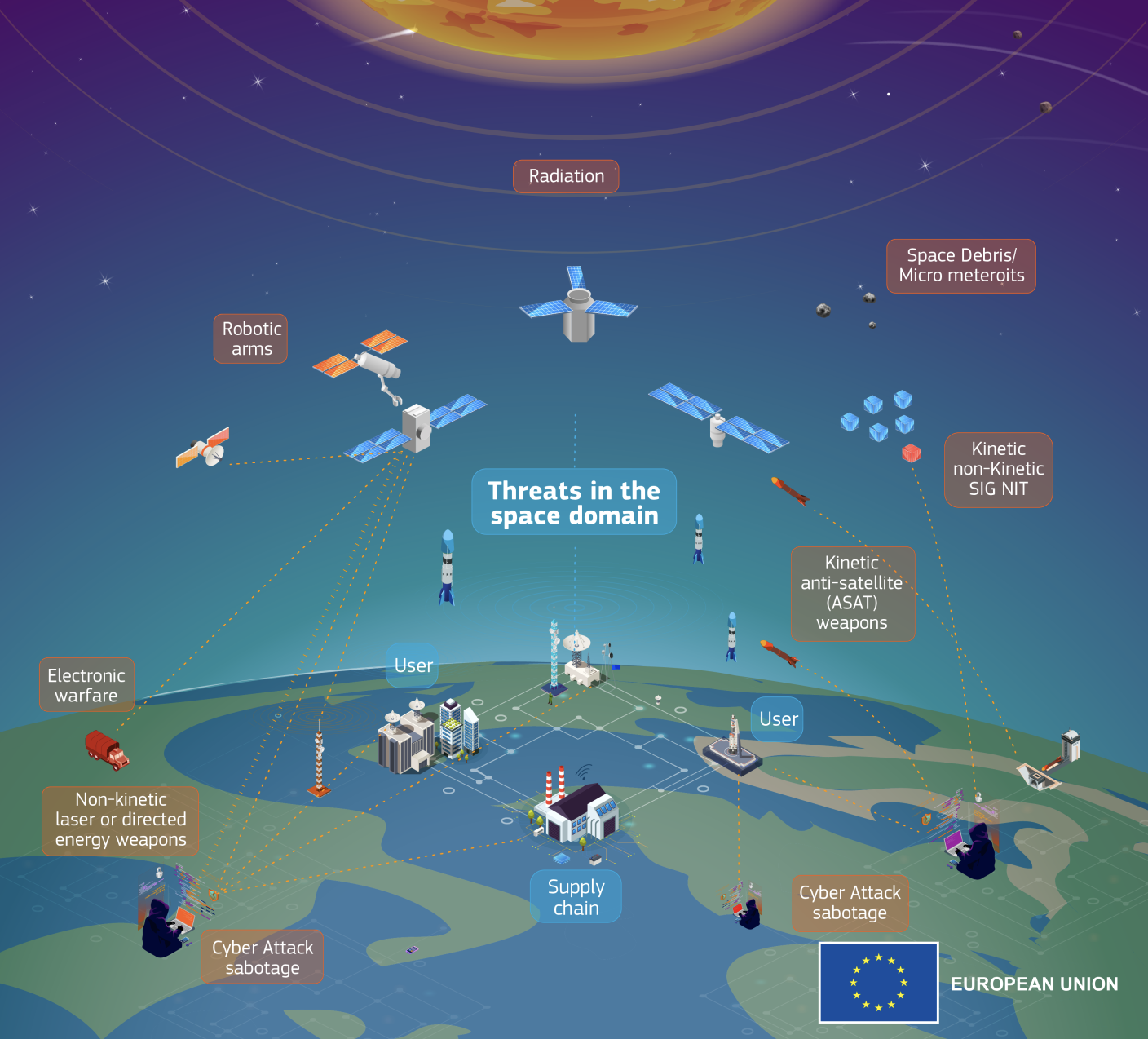
The EU Space Threat Response Architecture
On 28 September 2026, the Council of the European Union adopted 'Council Decision 2026/2195' to strengthen the EU Space Threat Response Architecture (STRA). This new STRA mechanism is designed to respond to increased irresponsible and hostile behaviour in the space domain and counter threats to the security of EU Systems as well as of one or more member states -including their territory, space systems and services. Russia has notoriously attacked these systems, and threatens them countinuoulsy from satellites ground stations all the way up.
The Council's decision aims to allow for an effective response: STRA will now set out operational provisions enabling the EU to monitor, alert and take immediate action by mobilising relevant CFSP (Common Foreign and Security Policy) tools in a consistent way. In practice, when urgent action is required, the High Representative has the prerogative to “adopt a provisional EU response.”
The Council will then have to confirm, modify or revoke the provisional EU response as soon as possible, and not later than within four weeks after the provisional response has been adopted. This process establishes the "space security toolbox" - including the possibility for the High Representative to “propose targeted restrictive measures - and provides for a yearly exercise for the implementation of the decision.”
So Europe, here we go again with procedures for threat notification, intelligence sharing, diplomatic responses, sanctions, technical mitigation, and potential military missions. Does this multi-layered process of coordination among Member States sound like the kind of response required when a space conflict demands rapid action, let alone credible deterrence? Not really.
While some experts have welcomed 'Council Decision 2026/2195,' other realist strategists nailed it: "STRA’s emphasis on notification, consultation, and collective political decision-making signals weakness rather than deterrence." Furthermore, "it declares no space-control weapons, identifies no active or passive defense systems, and specifies no offensive counterspace capabilities. Nor does it identify which member states, such as France, possess relevant capabilities that could be integrated into a collective response."
Coordination alone is not deterrence. Until Europe demonstrates both capability and political will to deny adversaries their objectives or impose unacceptable costs for hostile action, STRA remains a framework for managing a space attack rather than deterring or defeating one.
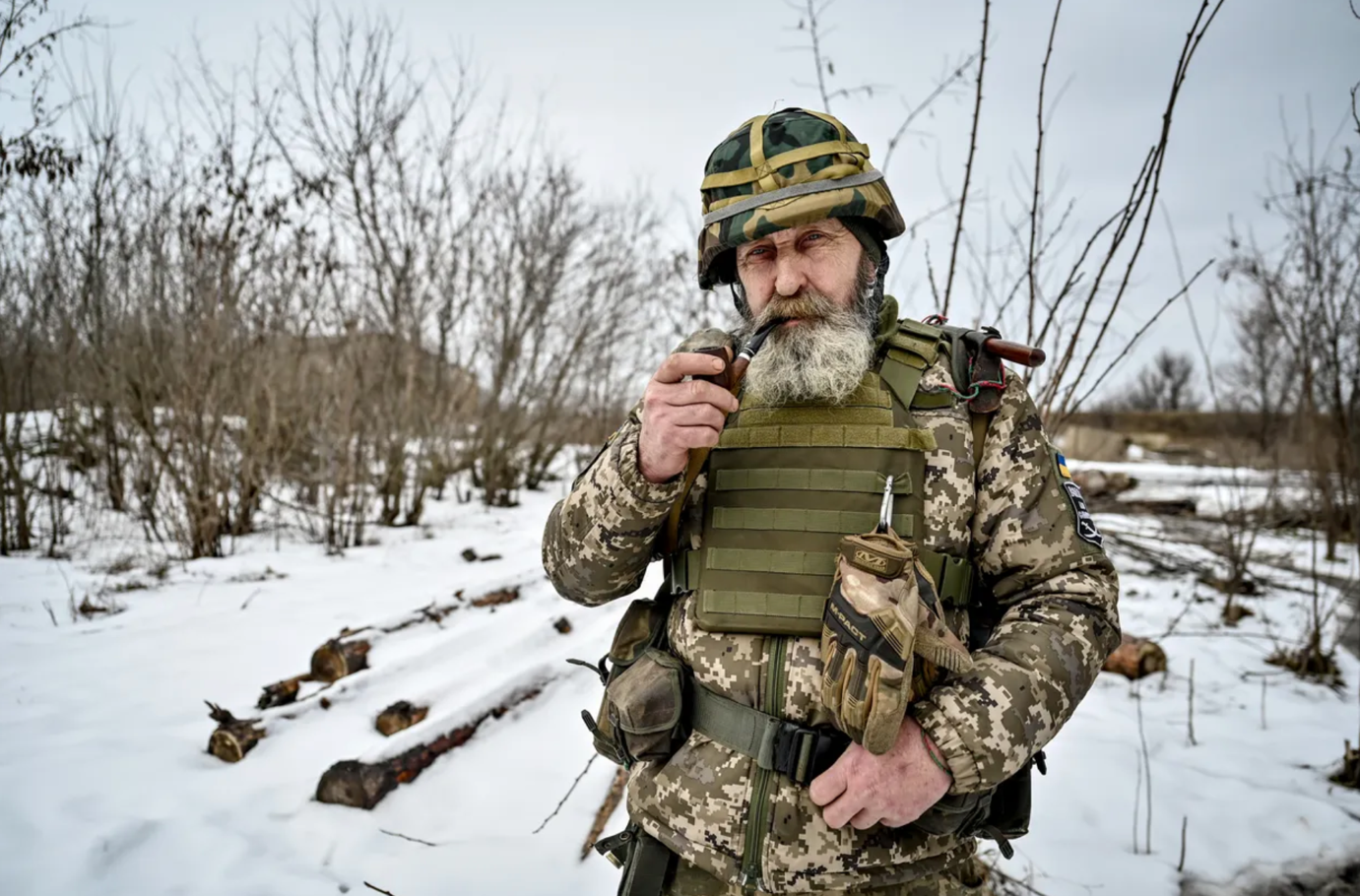
The spirit of Osavul
Pulling the Ukrainian battlefield connectivity rug from under Ukraine’s feet, and doing it for dubious motives and without warning, doesn’t represent a beacon of strategic (and moral) clarity. But the real shame is not on the American side. Americans are about to vote in the midterms. Their country and its government are their business. There isn’t much we can do about it, and it is not for us to interfere, especially as we flag the interference of some characters into e.g. the German lander election as depicted above.
No, the real shame is on Europe. After again another week of advocacy discourse at the excellent Warsaw Security Forum, Europe remains unable to protect Ukraine and itself autonomously and act quickly enough in projecting substitute capabilities.
To many, the name Osavul may evoke this notorious and now well funded AI-powered security and risk intelligence company that detects, investigates, and disrupts hybrid threats across digital and physical environments. But osavul has an historical and cultural meaning, which harkens back to the history of our European mainland.
In Ukrainian, the word osavul is written as осавул, and its feminine form osavulnya is осавульня. Historically, an osavul (осавул) was an administrative and military officer rank among the Ukrainian Cossacks. The ranks existed at the general officer level, regiment colonel level, and company captain level. As one of the highest state officials, general osavul ranked just below the Supreme Leader or Hetman.
They served as the Hetman's direct military aides, reviewed army readiness, and could command entire field armies during major campaigns. Cossacks are remembered as undomitable warriors who were fiercely independent in character, hence more challenging to lead and command but so much more effective on the battlefield.
Europe wasn’t born a quarter of a millenium ago. Europe, and the entire Eurasian continental plate, is home to the most ancient civilisations on Earth, dating back to the neolitic era, even before the invention of agriculture away from hunter gatherers tribes and societies. Perhaps Europe is old enough that it should summon its inner osavul осавул and osavulnya осавульня.
Because if Europe doesn’t wake up and defend itself and its neighborhood, noone else will. Ukraine isn’t a far-fetched conflict abstraction. Ukraine is hthe record card of how Europe will soon look if we keep sleeping at the wheel.
Further, in the current electoral context, if the “true leadership” model for Europe can only be found by the masses into the political programs and societal unravelling of either the far-right or the far-left - starting with Germany, or France - then we might have an even bigger problem. In both cases, that means that Europe, waking up with a hangover after its 35 years of strategic vacation, has learned nothing from History and a Cold War that never really ended. That is the real shame. And the choice is ours, to solve this European quandary.
“Opinions expressed in this article are solely the author’s own, and do not represent the views of any organisations he might be affiliated to.”
Author: Christophe Bosquillon MSc, MBA, Founder & Director, Senior Fellow, NIDS - National Institute for Deterrence Studies (U.S.), Fellow, EIPIO – European Institute of Professional Intelligence Officers