
Juan Carlos Cortés: Spain's Space Agency Bets on Startups, Launchers and Sovereign Access to Orbit
Juan Carlos Cortés, director of the Spanish Space Agency and ESA Council Chair, on startups, home-grown launchers, orbital sustainability and Europe's space ambitions.
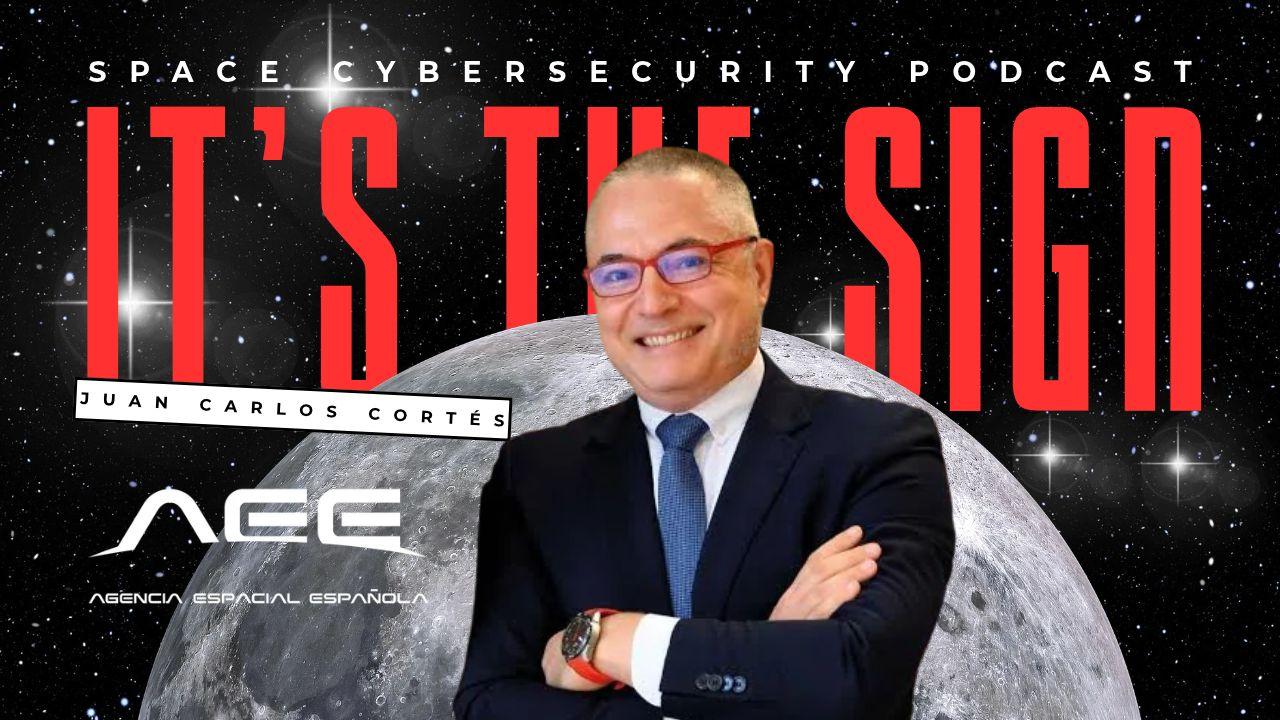
From Components to Complete Systems
Spain has worked in space for more than 65 years, Juan Carlos Cortés told IT'S THE SIGN, and it started where many countries do: with infrastructure, electronics and structures. The ambition, he says, was always to climb the value chain, taking responsibility for bigger components and then whole systems. Today Spain is the fourth-largest contributor to the European Space Agency (ESA), which he reads as proof that space now ranks high on the Spanish political agenda.
The stated purpose is practical: use space to improve citizens' daily lives. Cortés says Spain can now develop, produce and operate complete satellite systems. Next year, he says, it will also join the small club of countries able to put their own payload in orbit, with the flight of Miura 5, the launcher built by Spanish company PLD Space.
Behind both goals sits one idea. Space is cooperative by nature, Cortés argues, but strategic autonomy remains key. Spain wants to retain certain technologies of its own, especially those that serve defence and security users.
One Continent, One Space
Elected ESA Council Chair on 1 July for a term of two years plus one, Cortés is careful about his role. He represents the member states, he says, so his priorities are theirs. Those priorities are clear enough: Europe as an autonomous space power, able to develop its own technology and bring services to market. That covers navigation, secure communications and Earth observation, a strong exploration programme, and independent access to orbit through Ariane 6 and Vega-C.
He also stresses long-term technology work. ESA is studying nuclear space propulsion, a technology Cortés calls early-stage but key to exploring the solar system. Decisions in space, he notes, run on 20-, 30- or 40-year life cycles, so foundations must be laid well before a programme exists.
On Europe's institutional patchwork, Cortés is upbeat. ESA is intergovernmental and the European Commission is supranational, with a different legal DNA. He sees that as a strength: ESA builds programmes bottom-up with experts, while the Commission sets top-down political priorities, as it did with Galileo. His summary of the model is "one continent, one space."
A Young Agency With a Strong Mandate
The Spanish Space Agency was created in 2023 and has been operational since 2024. Before it existed, space responsibilities were scattered across several ministries. Its headquarters went to Seville after an open call that drew more than 20 proposals, Cortés recalls, and Seville's was the best. The choice, he stresses, was the result of a selection.
Cooperation is the backbone of the agency, he says, at four levels: with Spain's regions through a dedicated committee, across national ministries, within Europe through ESA, the Commission and EUSPA, and internationally through agreements with agencies on five continents. Bilateral agreements with France and Italy sit alongside them.
By law, the agency integrates and coordinates Spain's space activities, develops and coordinates the national space strategy, proposes space policy and drafts the first Spanish Space Law. It now counts more than 120 staff and contractors. Its budget tripled in the last year, and rose by more than 50% at ESA's 2025 ministerial meeting.
Betting on Startups and Launchers
The agency, Cortés says, is a management body, not an operator. It sets the strategy, budget and programme features, and industry, academia, scientists and users carry out the work. Years ago Spain chose to bet on entrepreneurs, with programmes supporting technology-based companies.
He points to one figure as evidence. Venture capital mobilized by the Spanish space sector was around 50 to 55 million euros in 2023. By the end of September 2026 it had reached 740 million euros, roughly fourteen times more, which he credits partly to the agency's catalyst role. He is also clear about the limits: 85 to 87% of global space investment still comes from public sources. The private sector's role will grow, he expects, as it did in aviation, but SpaceX and Amazon began with NASA's investment, and agencies stay key for now.
Launch is a long-term bet. Spain has backed launchers for more than 14 years, through development programmes, grants and later venture capital. PLD Space has the most advanced vehicle, and Pangea Aerospace is developing high-thrust engines. His logic is simple. The global space economy is worth about 600 billion a year and growing at double digits. Only 7% of it is linked to launches, yet 93% depends on them. Spain therefore backs constellations for applications, such as the Atlantic constellation, plus the means to put them in orbit, while relying on Ariane 6, Vega, SpaceX or Blue Origin in the meantime.
Debris, Law and the Next Generation
On sustainability, Cortés calls the global situation concerning. About 20,000 satellites are in orbit, and they cluster in certain orbits such as polar ones. Removing them all is economically impossible, he says. Reentry is no clean answer either, because it creates chemical pollution that affects the climate. He wants investment in technologies that reduce debris, or at least stop it growing, and in Life Cycle Assessment tools that measure a satellite's or launcher's impact from design to reentry. He also worries that crowded night skies hamper astronomy and could hide asteroids.
He doubts that rules alone will fix it. The planned European Space Act is wise, he says, but of little use unless mirrored by the US, China and Russia. He notes that China has asked the International Telecommunication Union to start designing a constellation of 200,000 satellites. The main legal framework, the 1967 Outer Space Treaty, predates all of this, and United Nations bodies such as COPUOS can only recommend.
Talent is the other long-term bet. One of the agency's seven directorates, Space and Society, explains the benefits of space to taxpayers and inspires young people. Its flagship initiative, Astronaut for One Day, selected 40 students, 30 from primary school and 10 from university. After training they flew 20 parabolas on a parabolic flight and became ambassadors of the agency for a year. Cortés calls it one of the most amusing things he has done there.
Conclusion
Spain wants to own both its satellites and the rockets that lift them. The next test comes in 2027, when Miura 5 is due to carry a Spanish payload to orbit. More details about AEE's projects and activities: aee.gob.es
Listen & watch the full episode:
Interviewer: Margaux Lucas — Margaux Lucas, MC at CYSAT and Doctoral Candidate & Teaching Fellow in Political Science, Sciences Po Strasbourg / University of Strasbourg.
Producer: Tatiana Skydan — co-founder & editor-in-chief at THE SIGN.MEDIA