
CYSAT Madrid 2026 brings the space cybersecurity community together for its first edition
The conference took place at Digitaliza Madrid, as part of Madrid Tech Week, with the participation of space agencies, industry and research centres.
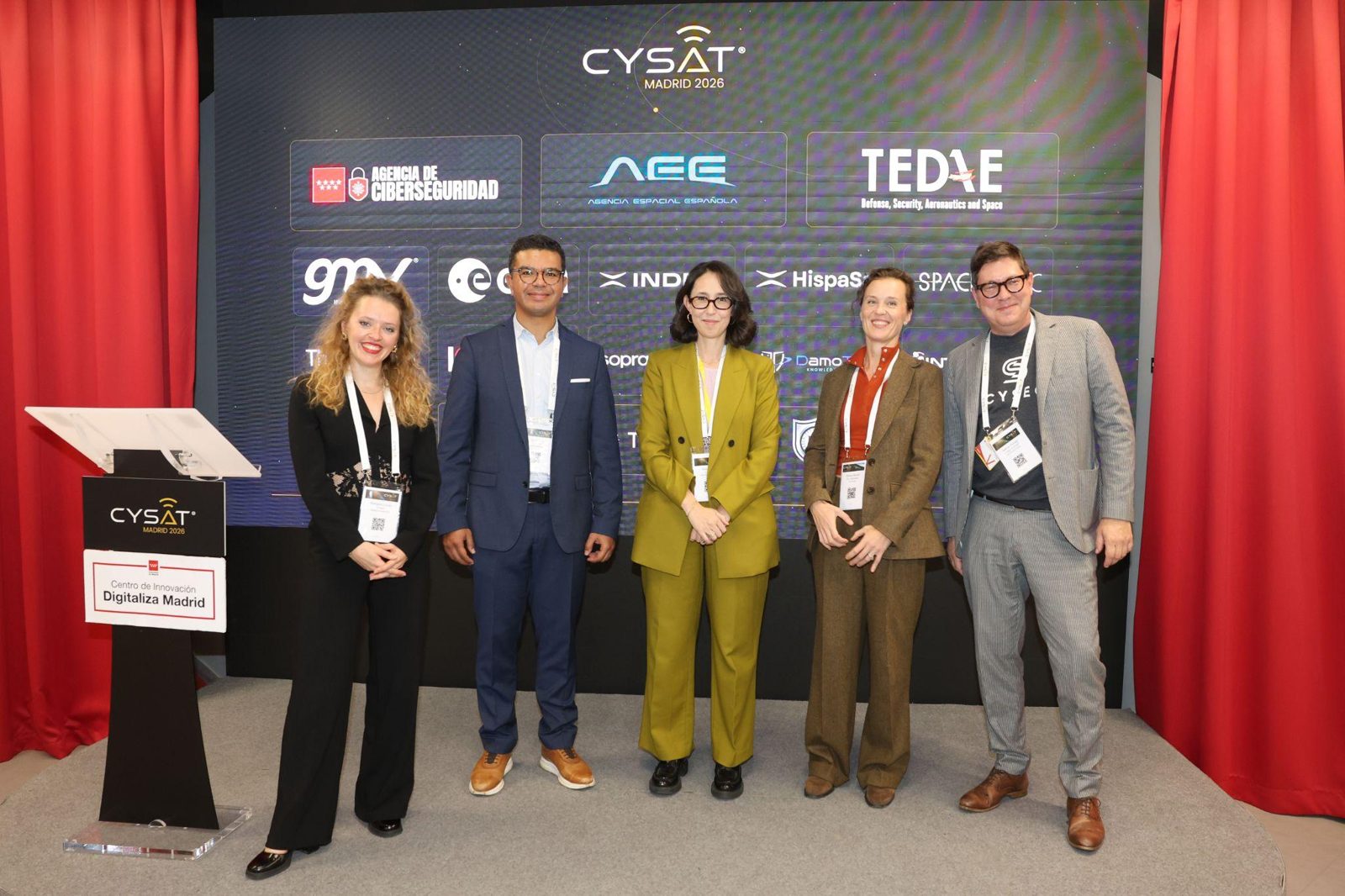
On October 28, 2026. Digitaliza Madrid hosted the first edition of CYSAT Madrid, the Spanish edition of CYSAT, the leading international event on space cybersecurity.
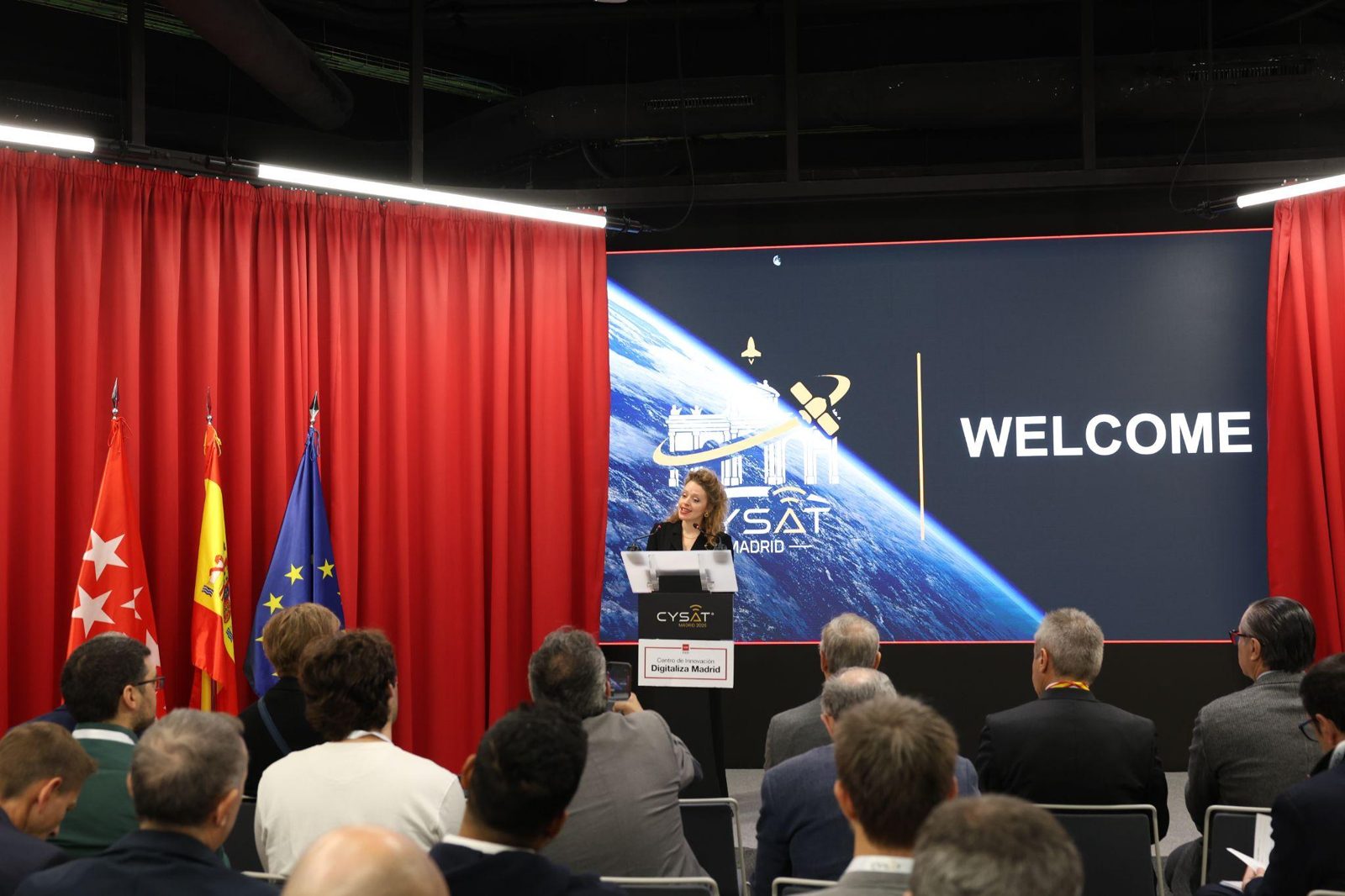
The day brought around 200 attendees and 28 speakers and panellists across two stages, and was overshadowed by the tragedy that struck Spain on October 28, which forced the closing remarks to be cancelled.
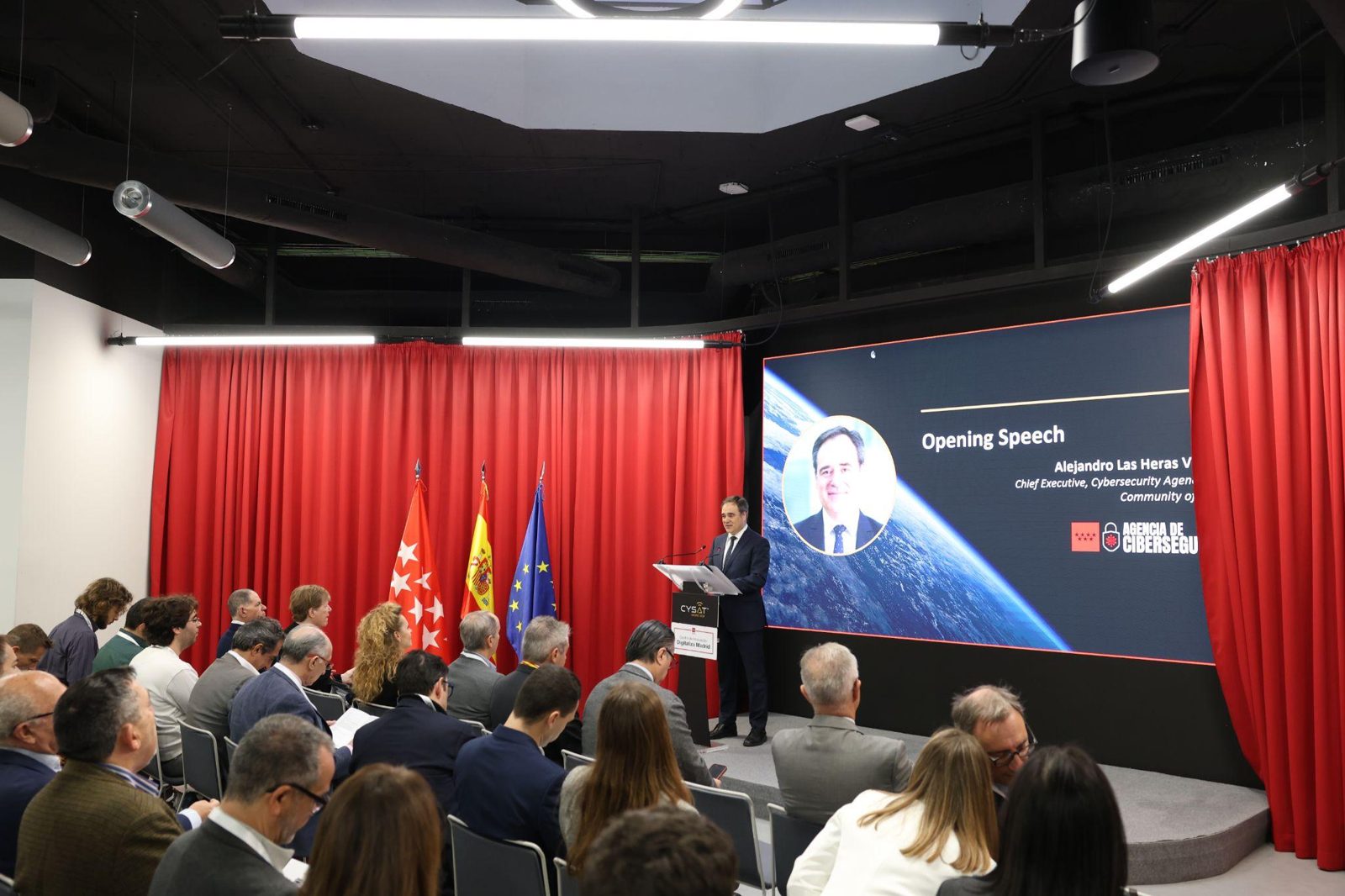
The opening session was delivered by Alejandro Las Heras Vázquez, CEO of the Cybersecurity Agency of the Community of Madrid. He recalled the announcement made at the close of CYSAT Paris last May and argued that "space is no longer a separate domain; it is one more piece of the infrastructure of our digital life on Earth", present in navigation, communications, the synchronisation of financial services and emergency management. For that reason, he stressed, space cybersecurity "is not only a matter for the space industry, but for all of us who provide essential services".
Las Heras also presented the goals of the Agency's 2025-2028 Strategic Plan: to establish itself as a national benchmark this year and to achieve European recognition in 2027. He voiced the ambition for CYSAT Madrid to become the leading event in Spain and a bridge between the Iberian ecosystem, Europe and Latin America.
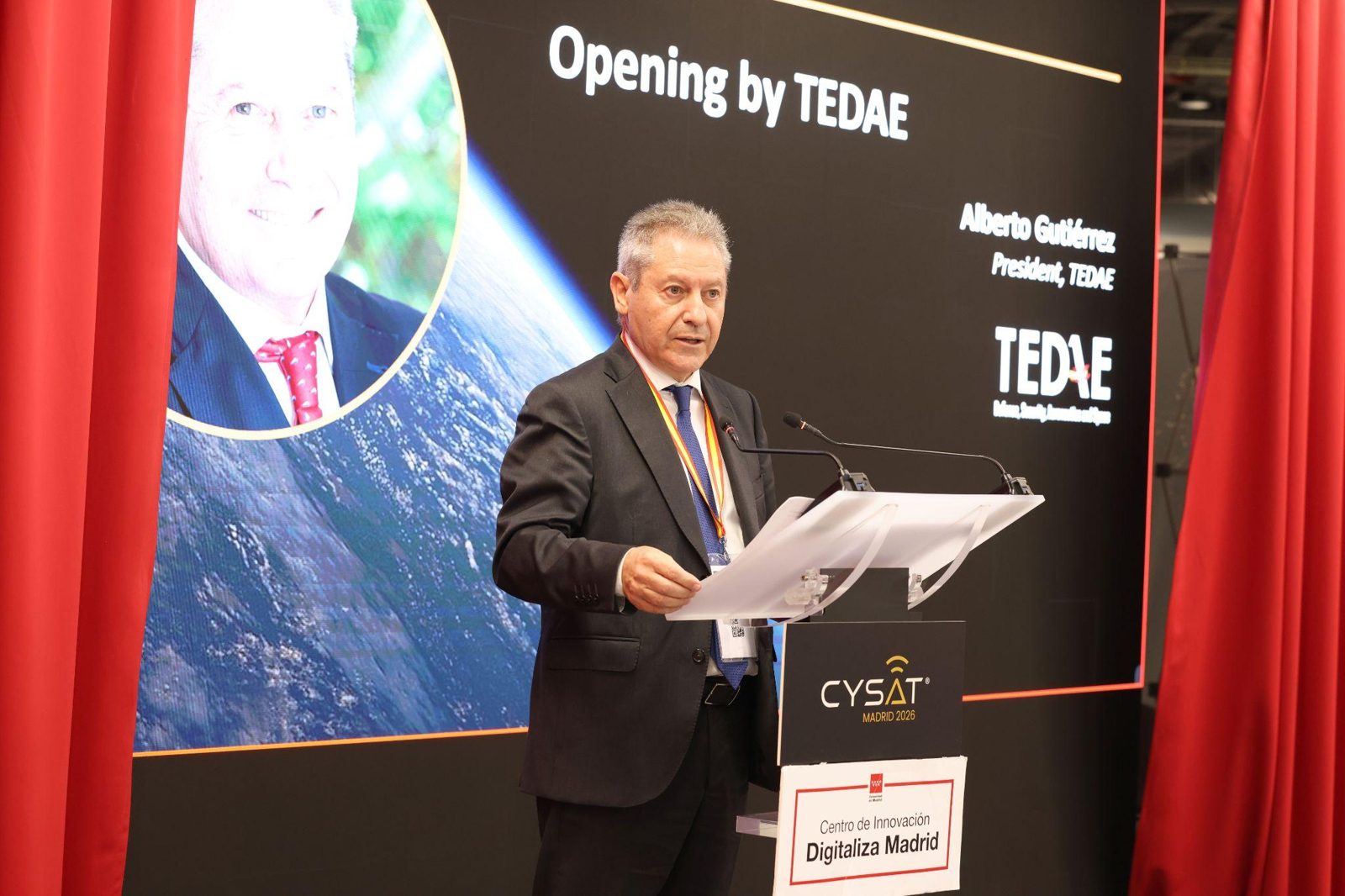
Next, Alberto Gutiérrez, President of TEDAE (Spanish Association of Defense, Security, Aeronautics, and Space Technology Companies), opened the day on behalf of industry: "Security is not the opposite of innovation. It is one of the conditions that allows innovation to reach its full potential. Anticipating risks and preventing threats must be part of how we design, develop and operate our space capabilities".
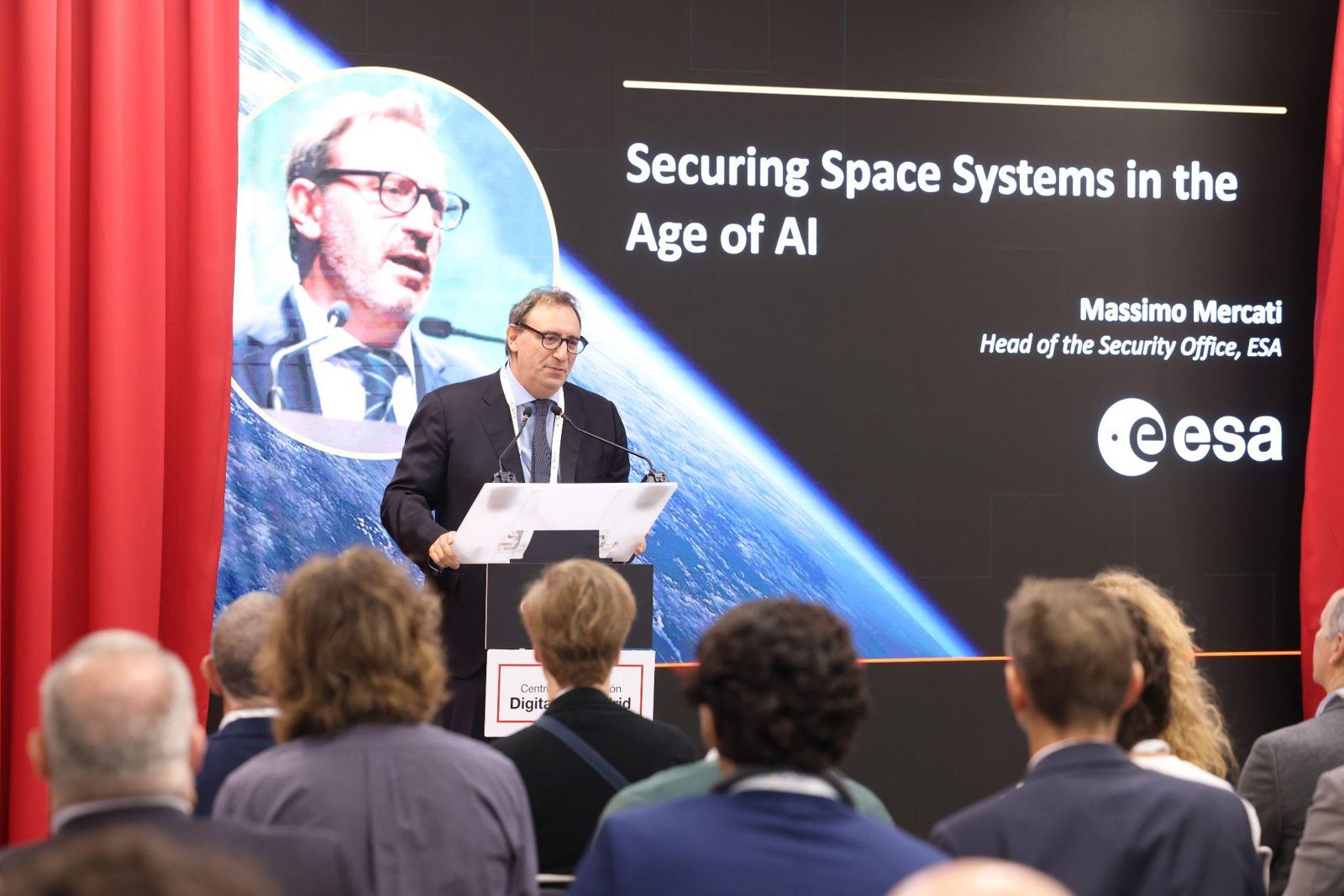
The main stage programme focused on the security of space systems in the age of artificial intelligence, with a contribution from Massimo Mercati, Head of the Security Office at the European Space Agency (ESA).
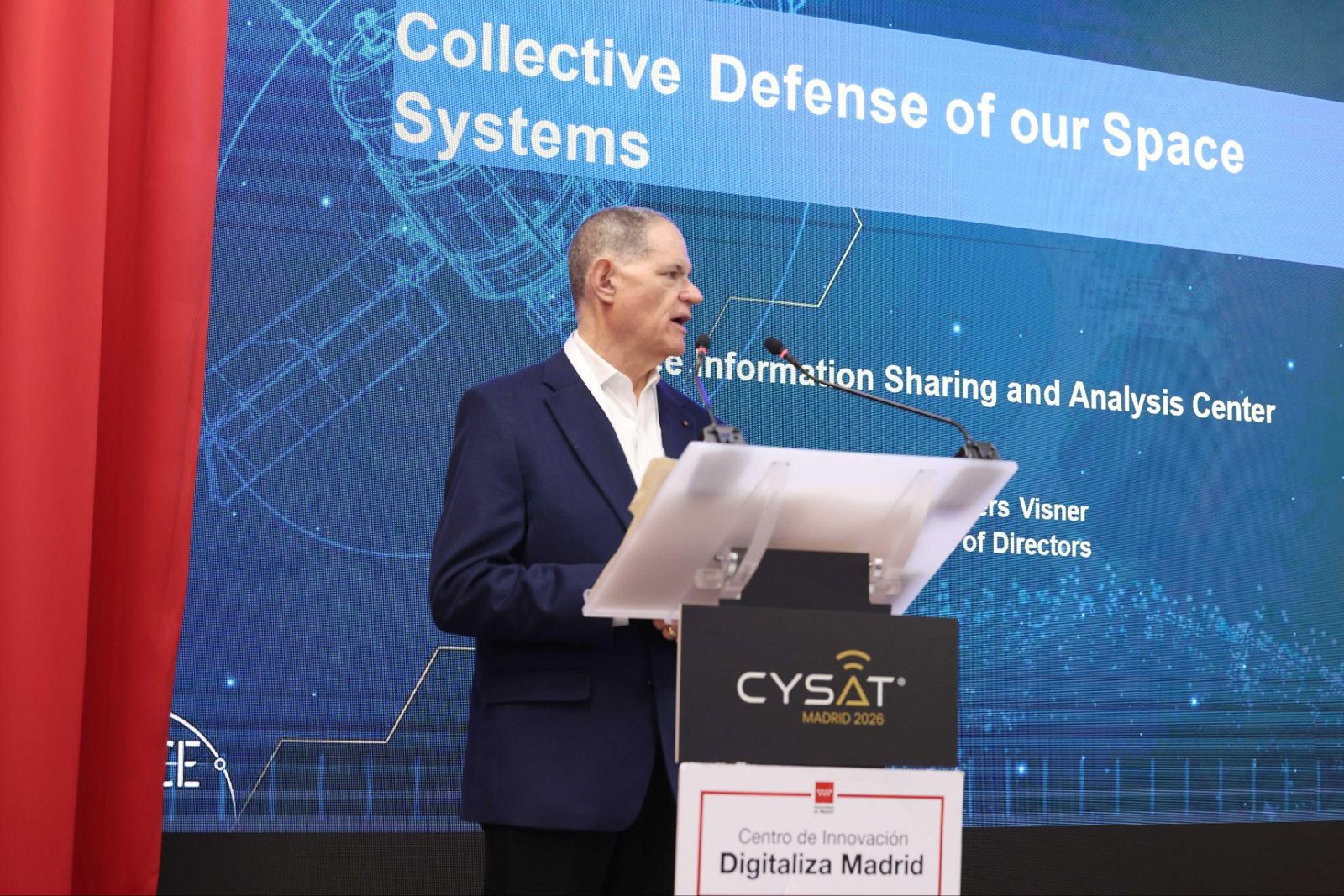
Samuel Visner, Chair of the Board of Space ISAC, made the case for the collective defence of allied space systems through "purposeful" information sharing, and warned that commercial space systems are already strategic targets.
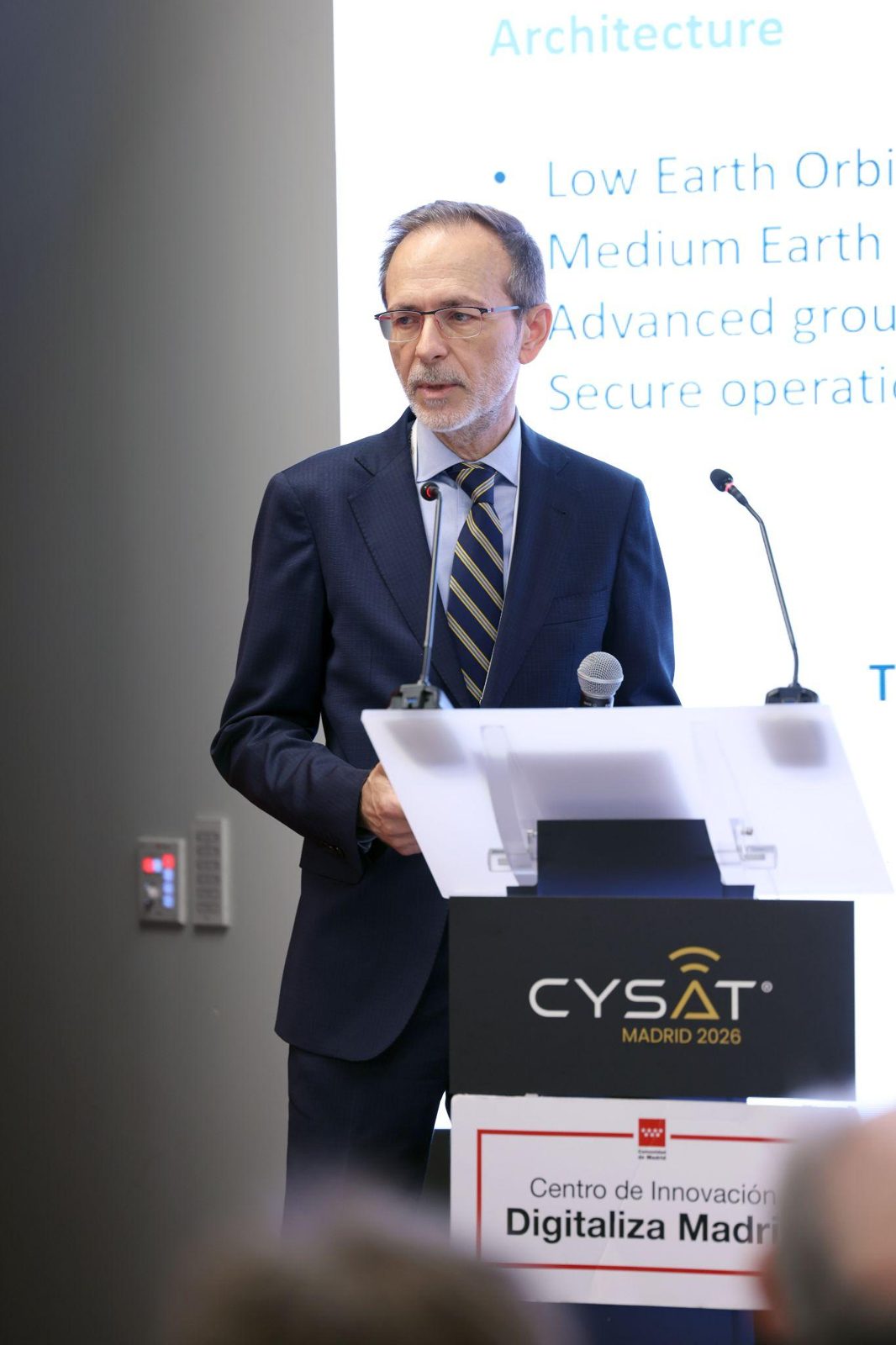
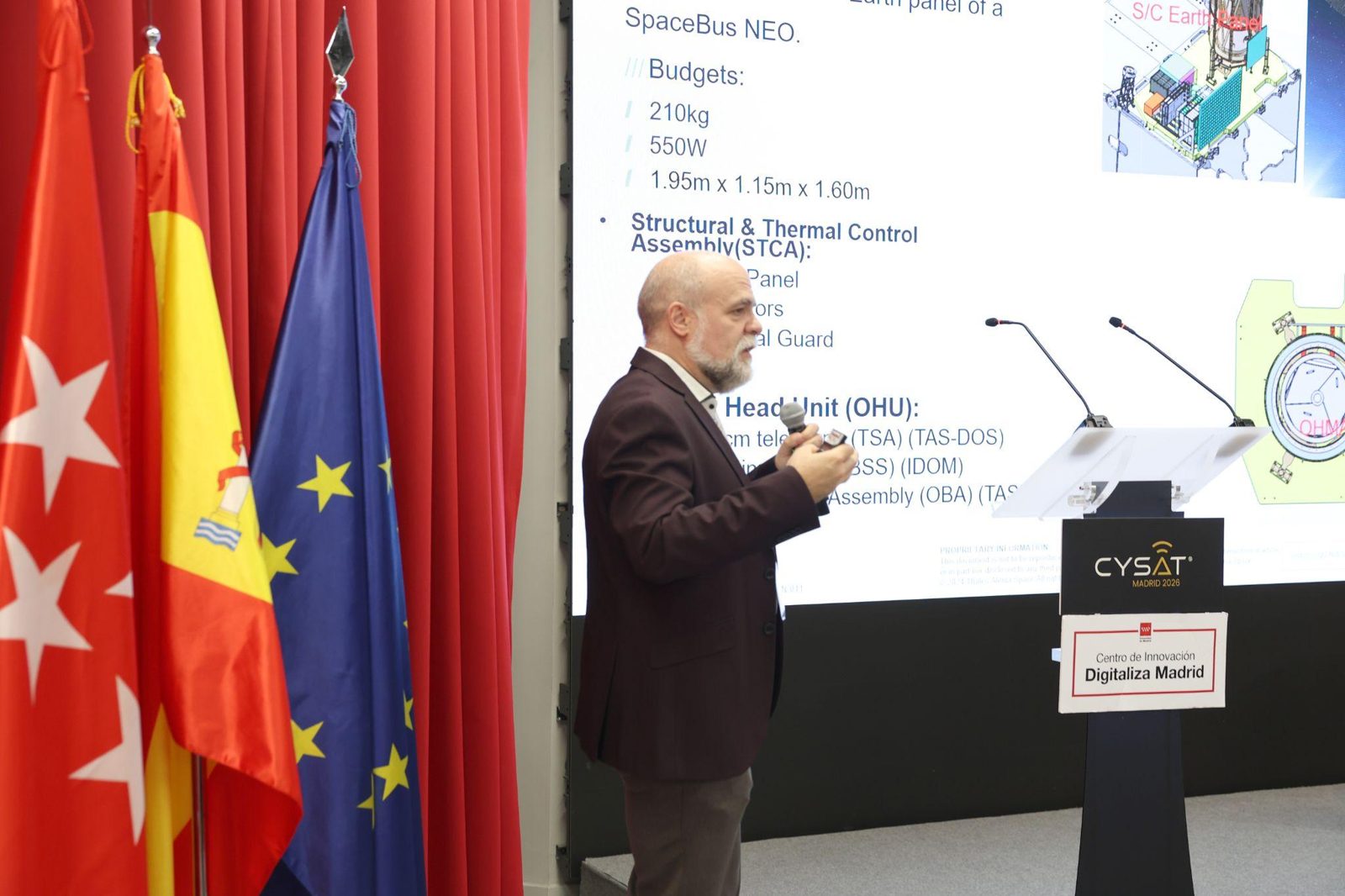
Manuel Sansegundo, CTO of Hispasat, presented IRIS² as the sovereign, secure communications layer that Europe was missing after Galileo and Copernicus, and Ángel Álvaro Sánchez, of Thales Alenia Space, explained progress on the Spanish project for quantum key distribution from geostationary orbit (Spanish GEO QKD), which aims to fly in 2030.
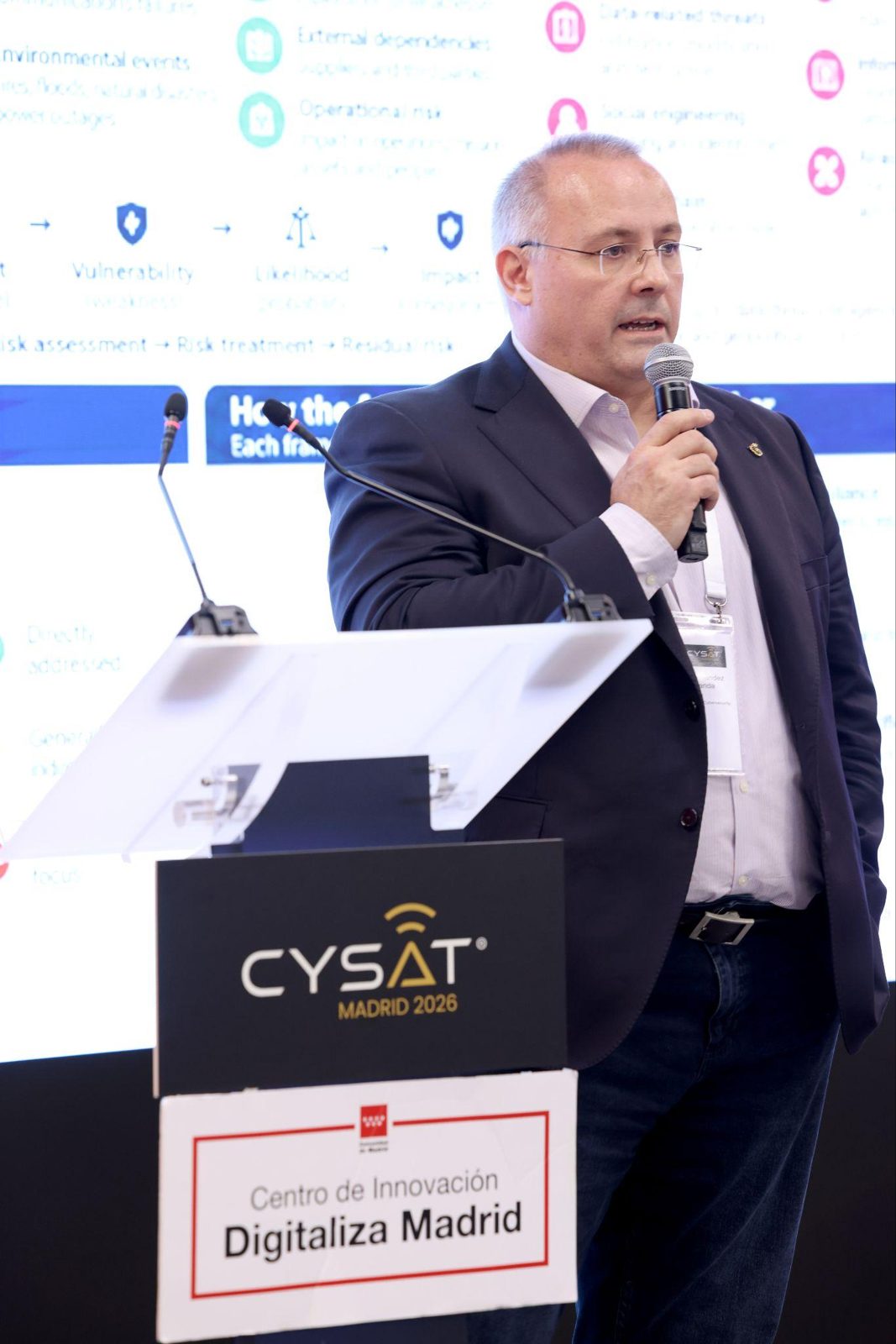
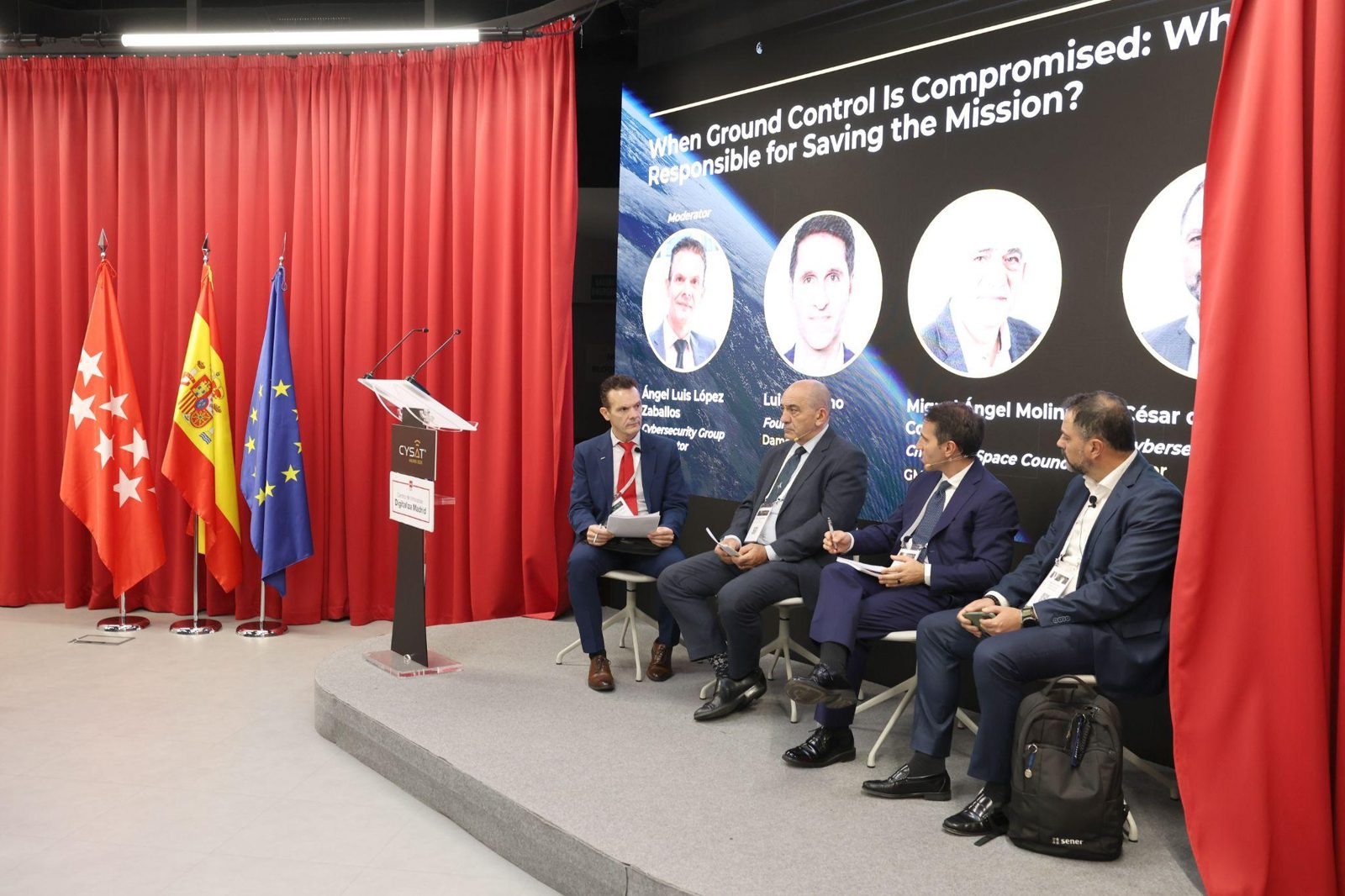
A discussion between representatives of GMV, DamoTech and Sener, tackled an uncomfortable question: who is responsible for saving the mission when the ground control centre is compromised. In the afternoon, Indra Space presented its end-to-end security model; Integrasys addressed the physical layer as the gateway for critical communications, where radio-frequency interference can disrupt a service without breaching any software; GMV analysed the offensive and defensive uses of AI; Oesía Group called for cryptographic sovereignty for critical missions; and Sopra Steria closed the talks with the results of a crisis management exercise that confirmed the lack of information sharing and coordination among actors as the sector's main weaknesses.
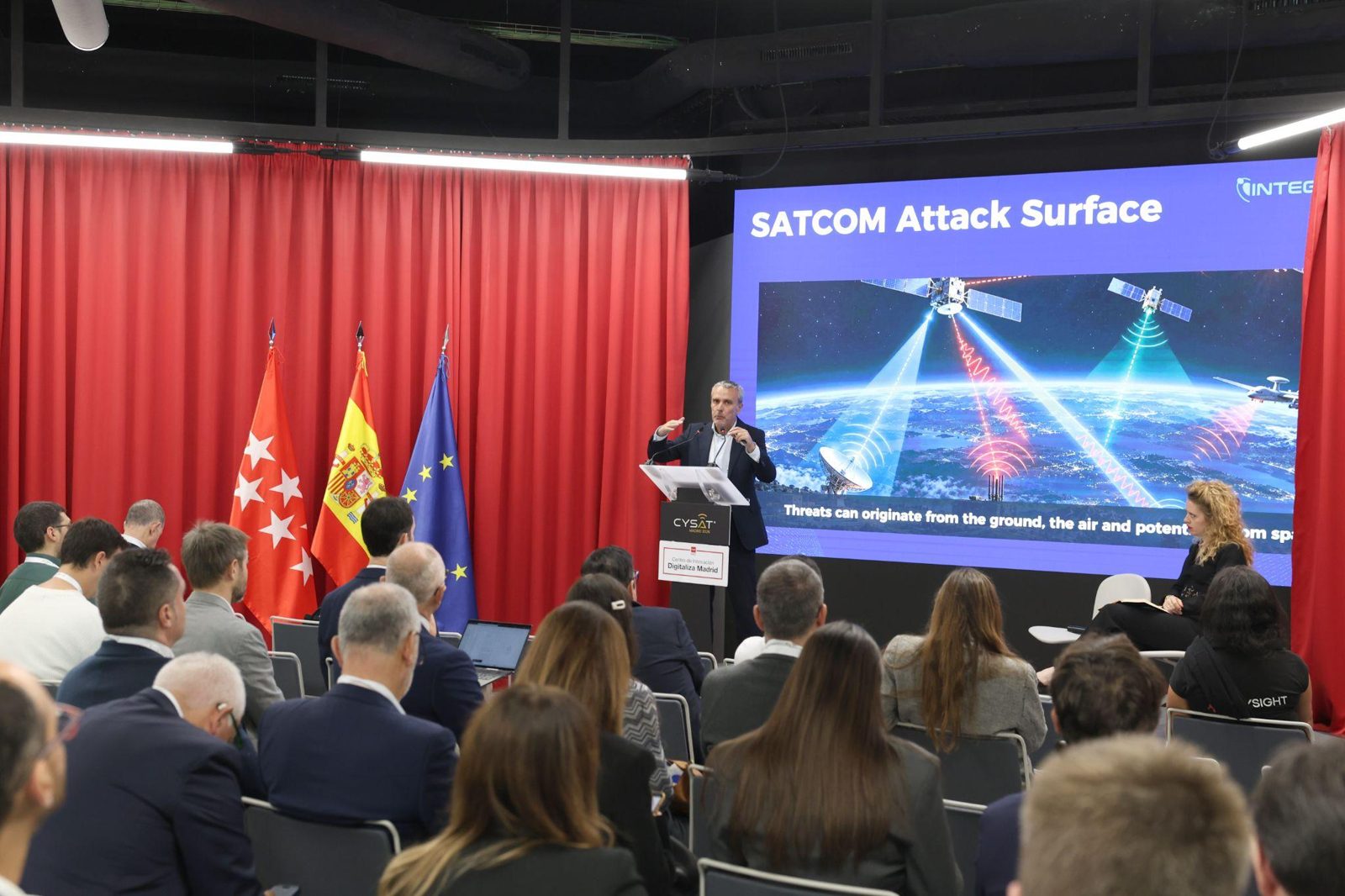
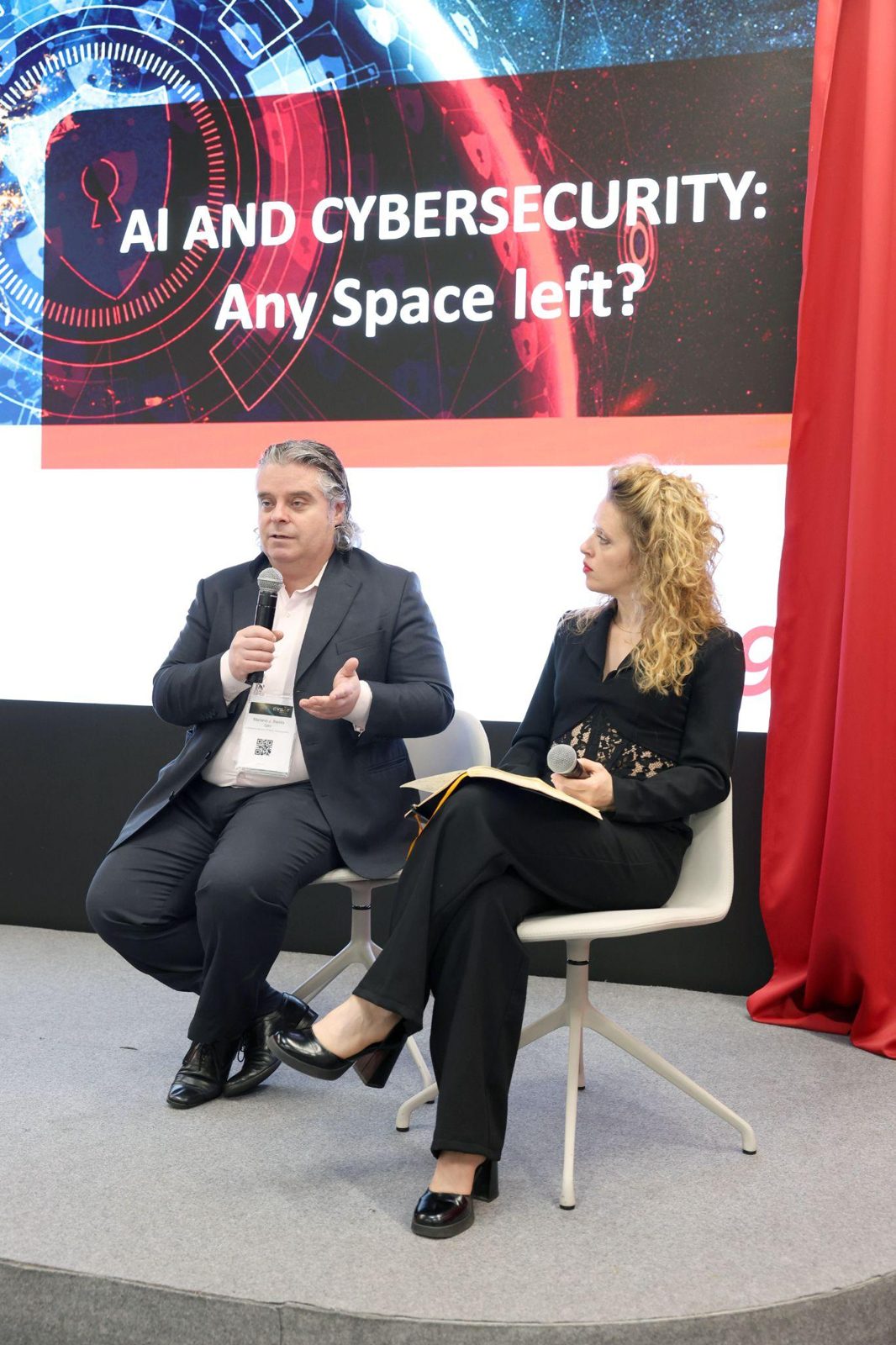
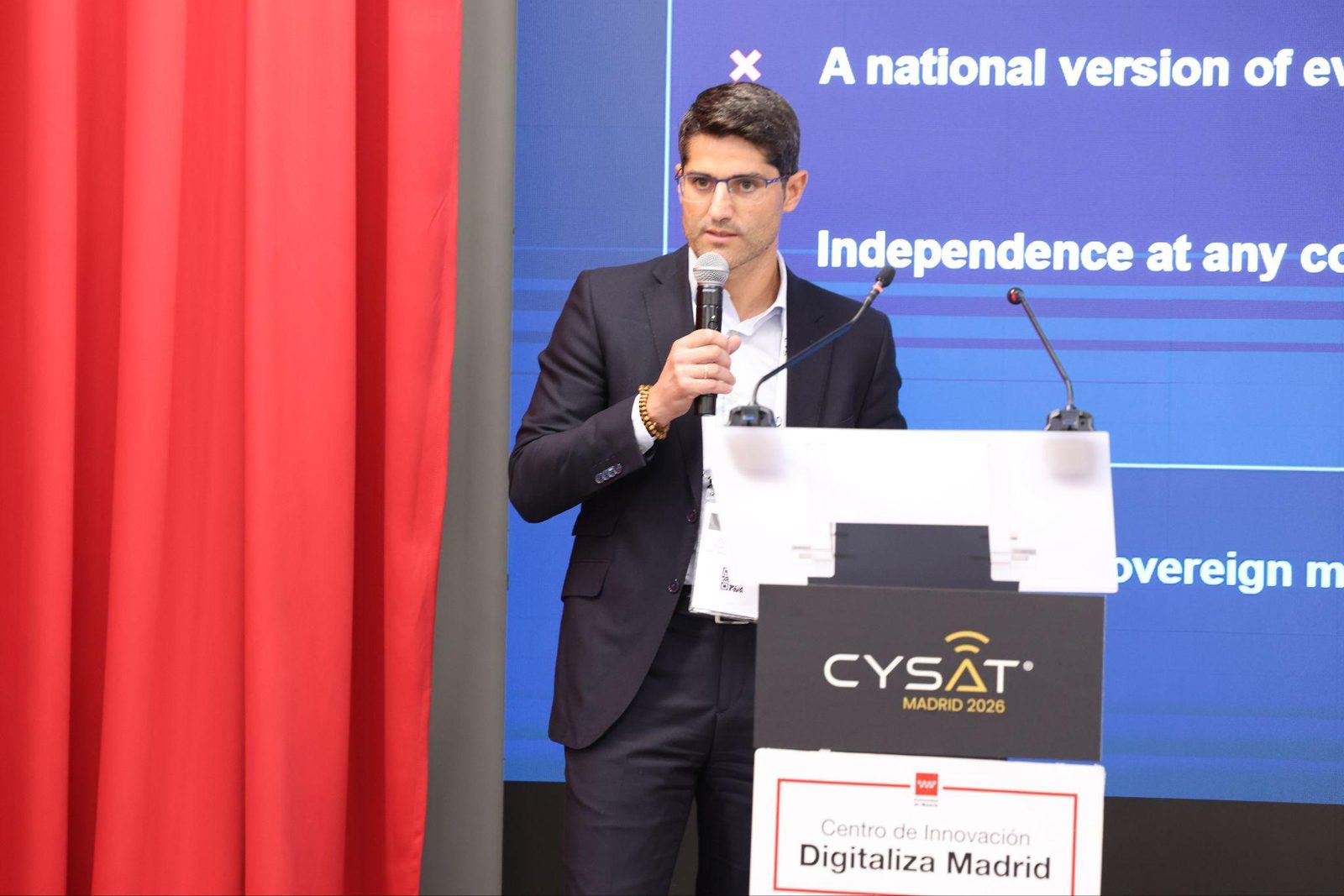
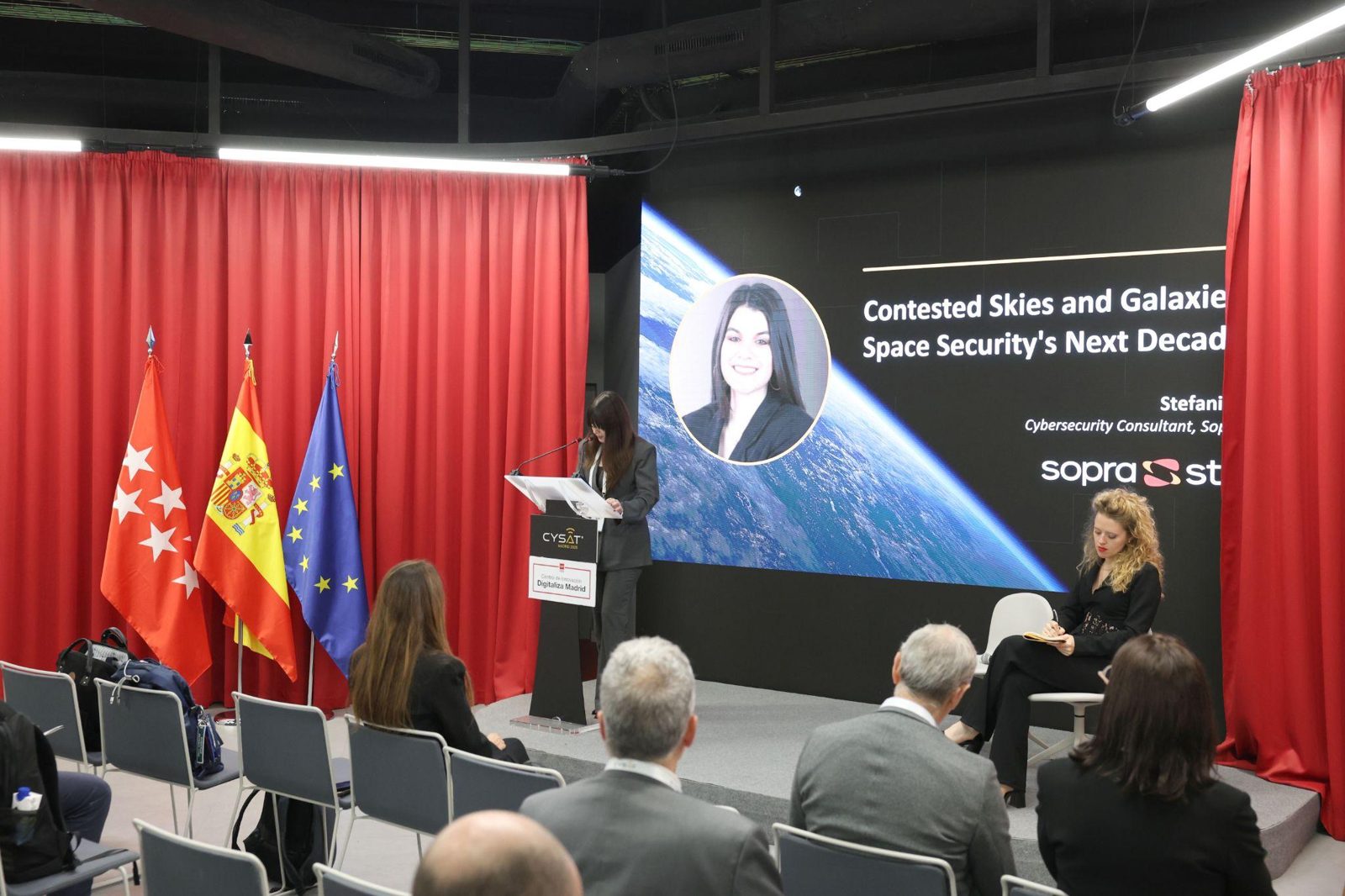
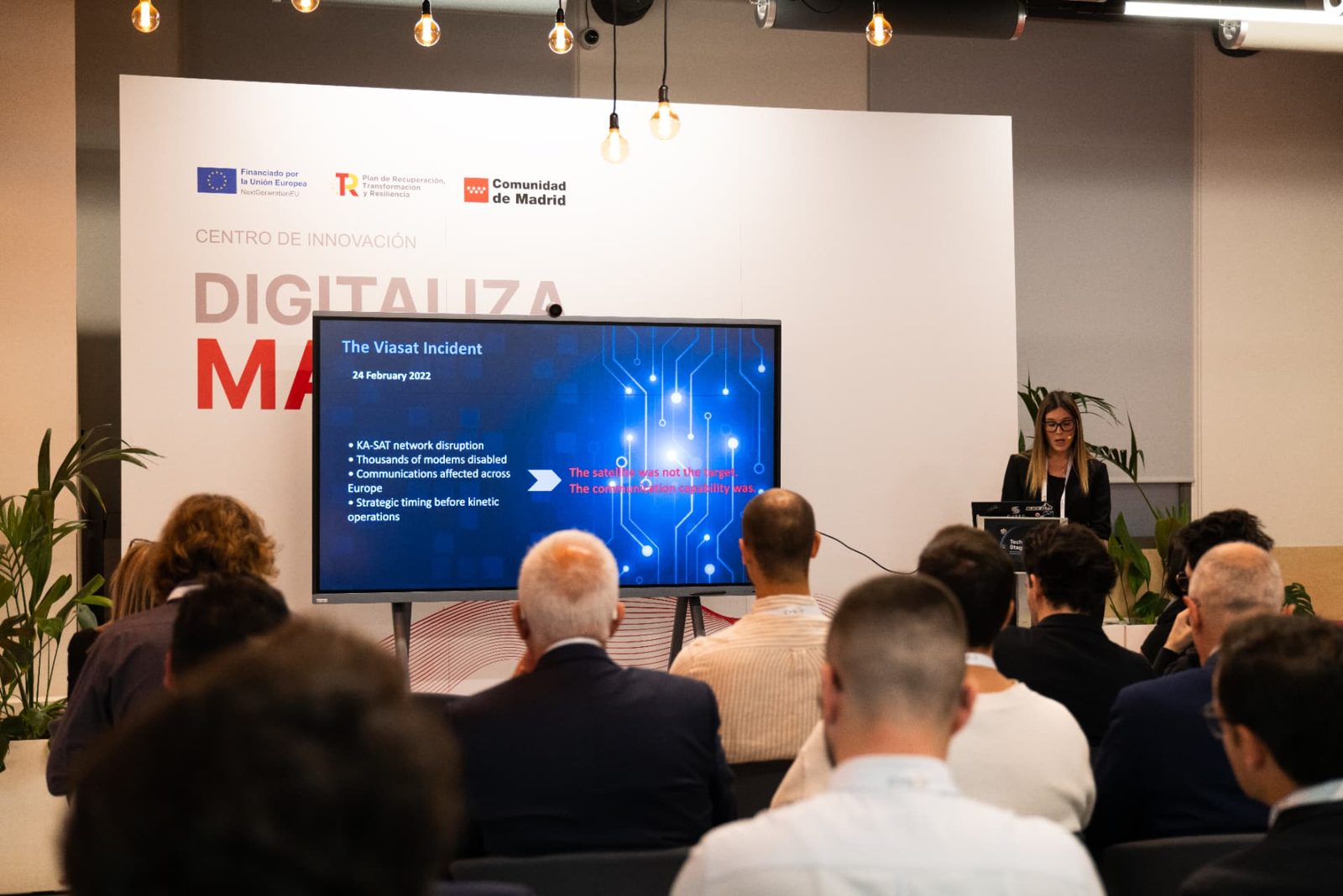
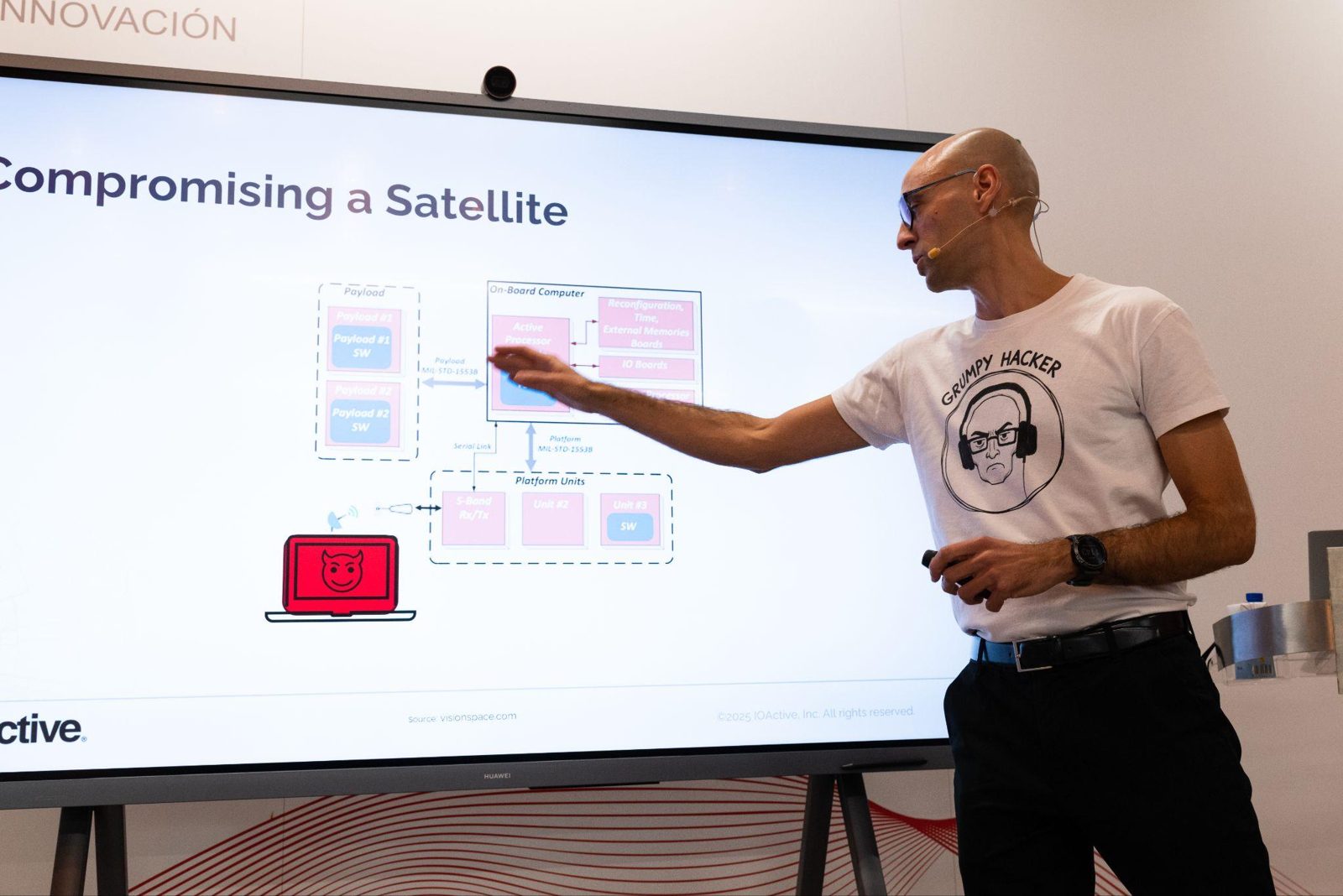
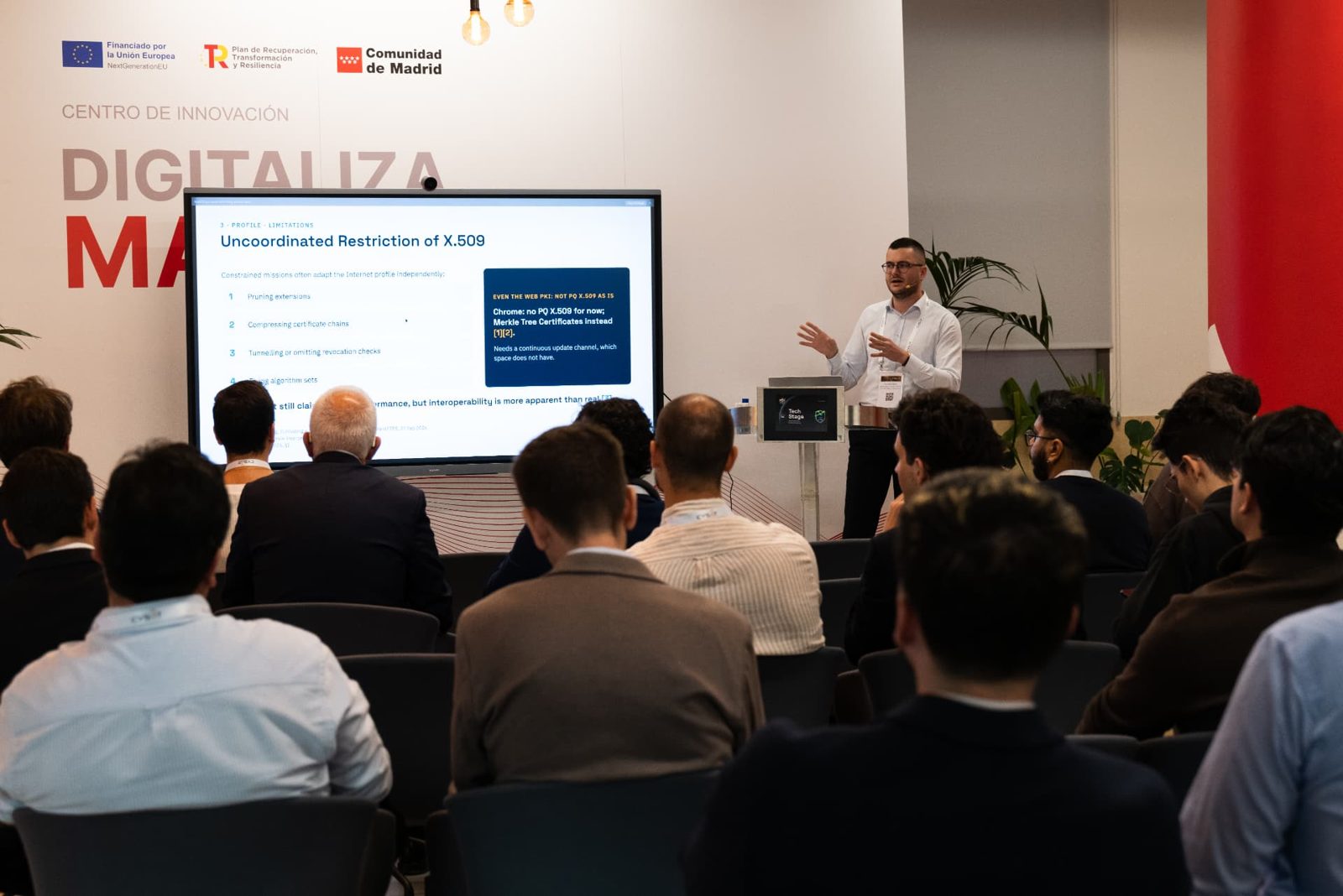
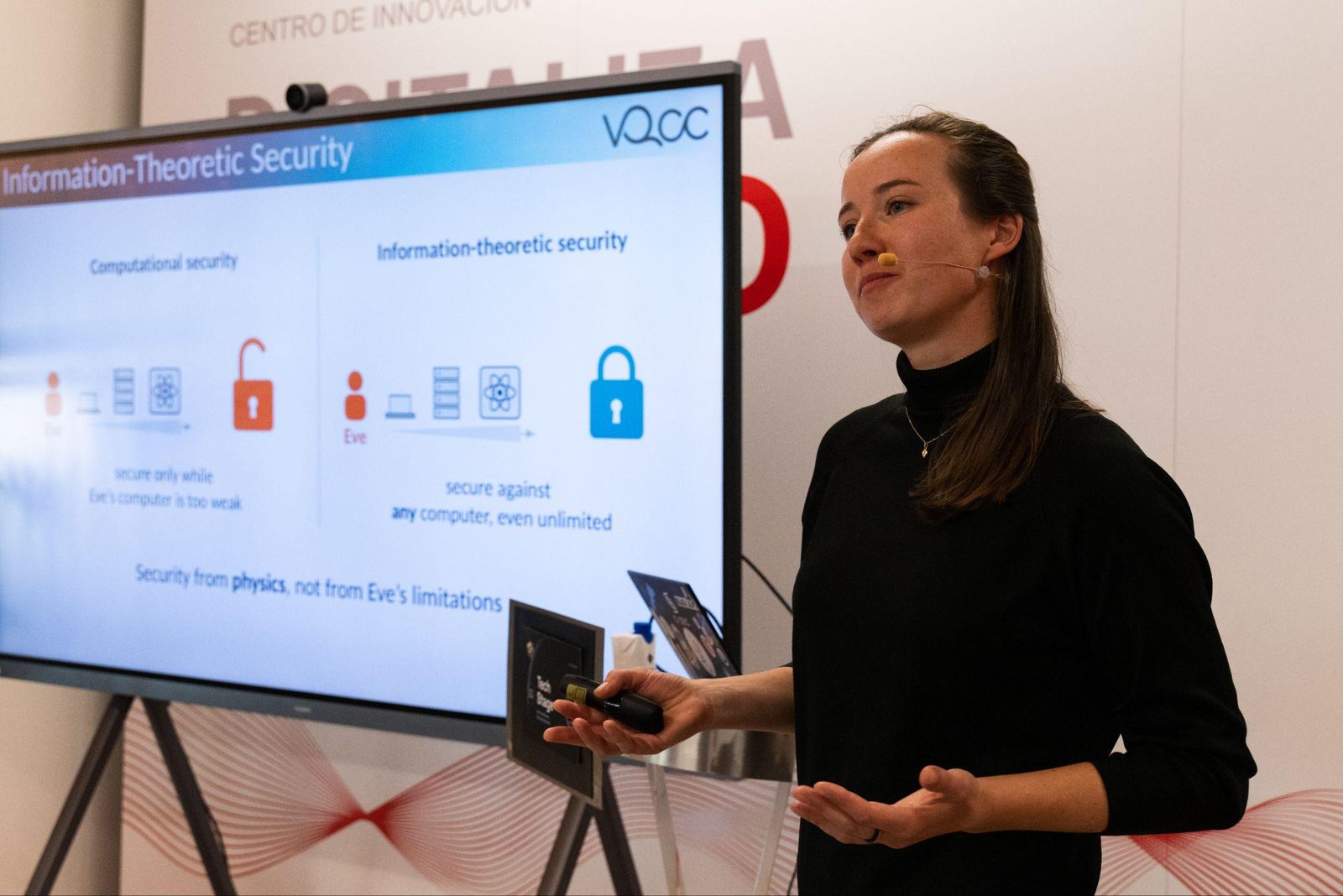
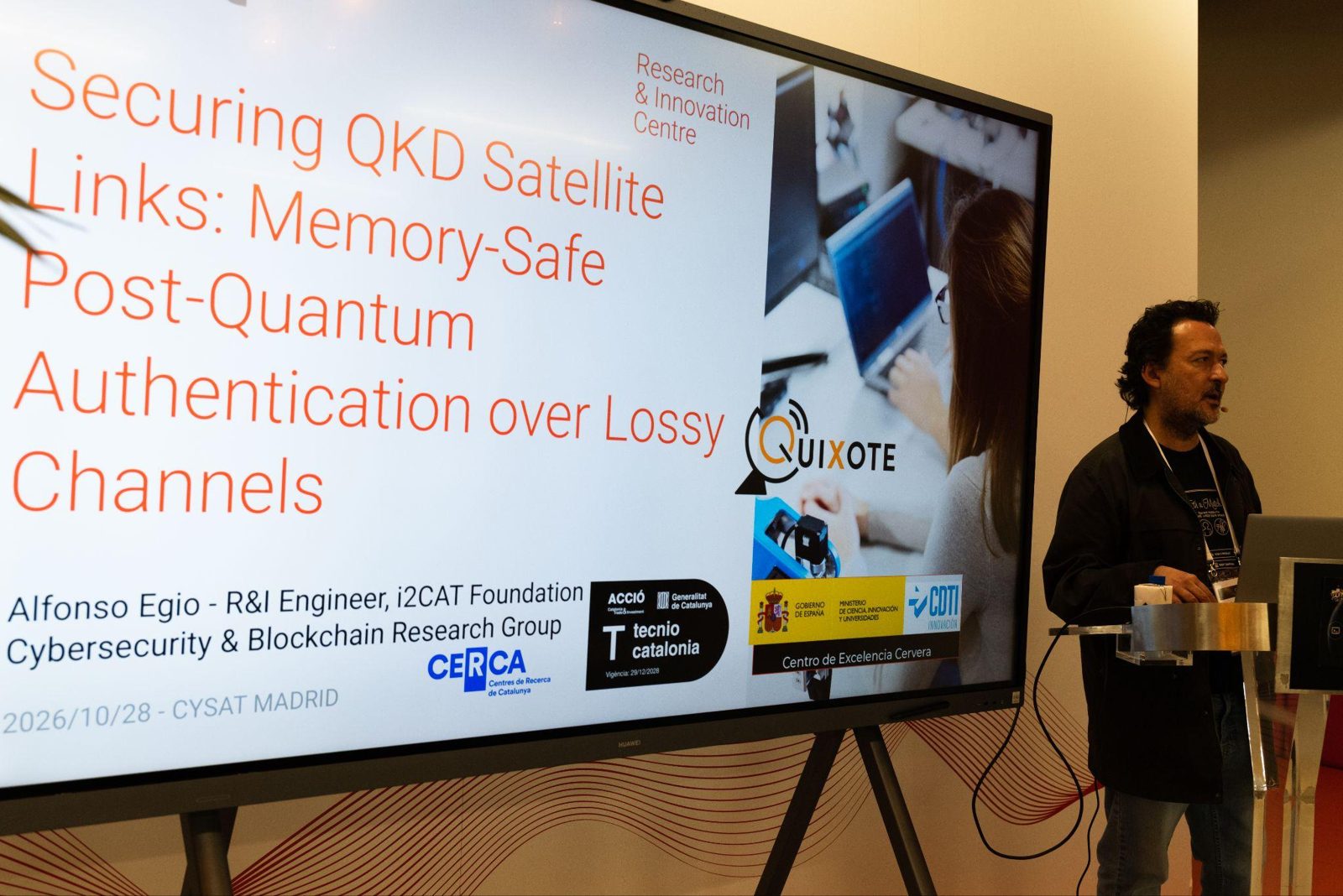
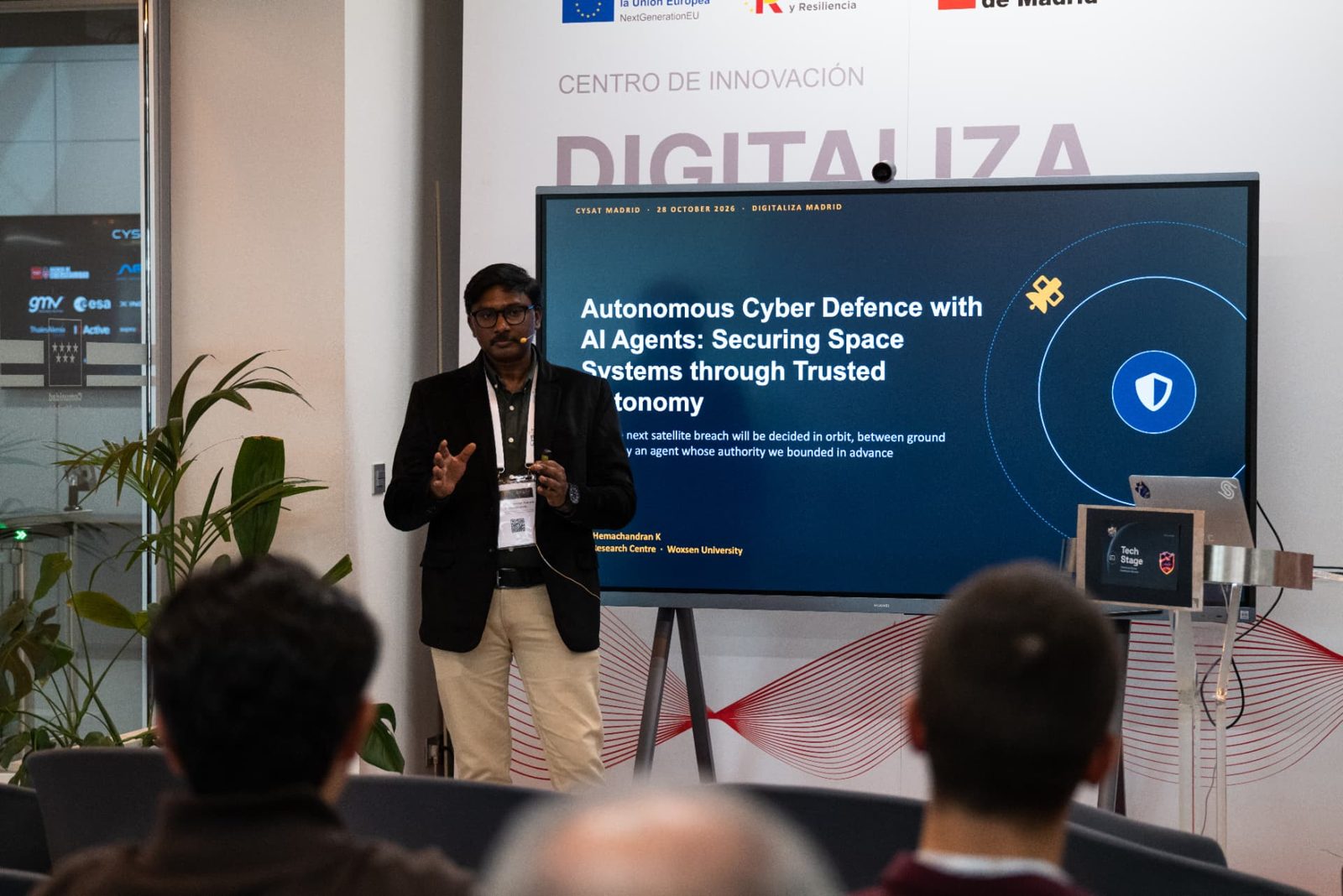
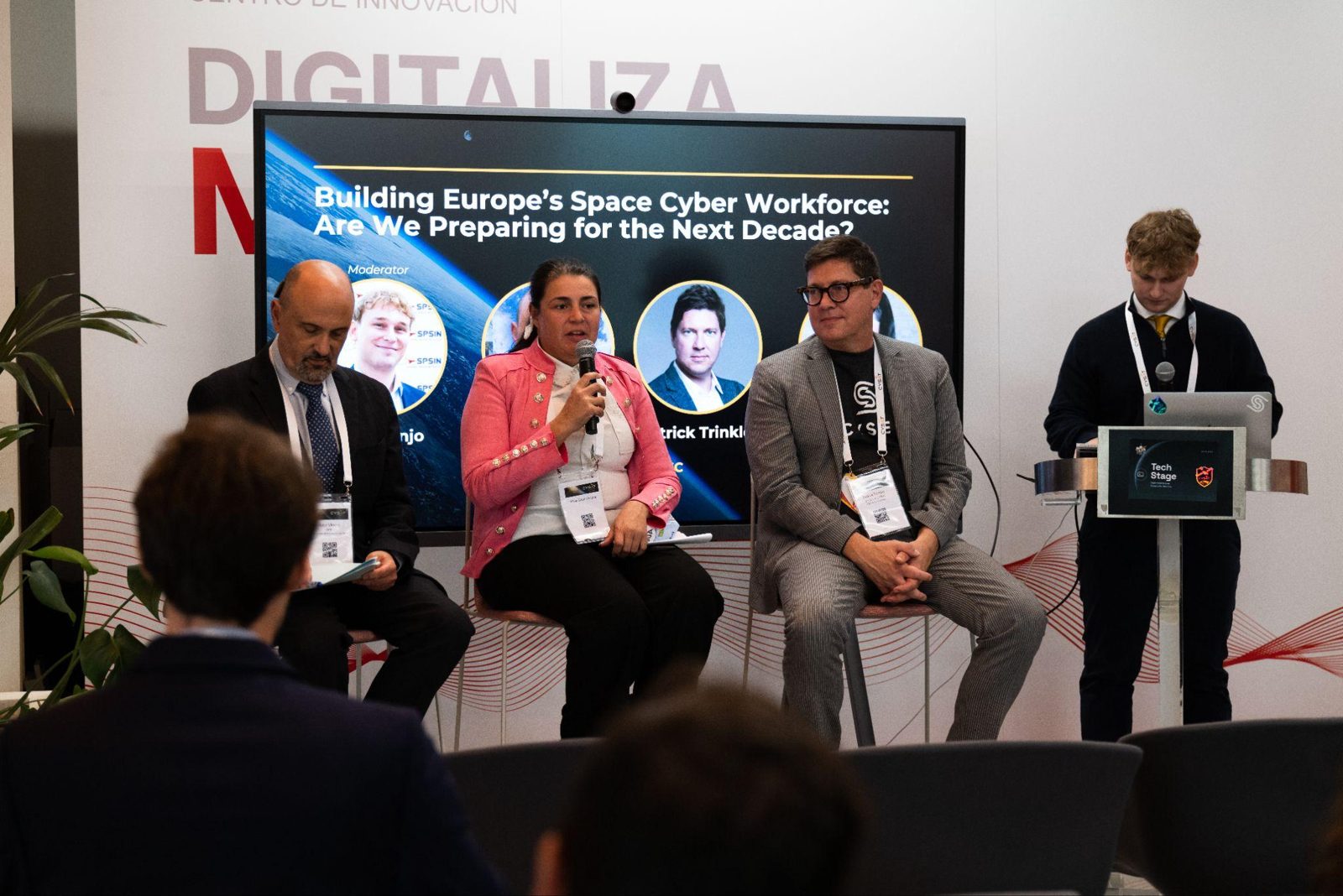
Meanwhile, The technical stage delved into security engineering: HWG Sababa analysed how to anticipate cyberattacks from geopolitics to the ground segment while Gabriel González from IOActive, showed how the leak of a single private key can compromise an entire SATCOM network; the IMDEA Software Institute proposed renewing PKI certificates for the post-quantum era; the Vigo Quantum Communication Center and the i2CAT centre discussed satellite quantum communications; Woxsen University presented autonomous defence with AI agents; and Keyfactor and CYSEC addressed the security of links between constellations. A second panel has united Spain Space Initiative, Politechnic University of Madrid, CYSEC and GMV, discussed how to train Europe's space cybersecurity workforce for the next decade.
Acknowledgements
CYSAT Madrid 2026 was organised by CYSEC and THE SIGN.MEDIA as a local partner and supported by institutional backing of the Cybersecurity Agency of the Community of Madrid, Spanish Space Agency (AEE) and TEDAE.
Sponsors and partners
GMV, Hispasat, Integrasys, AEE, Space ISAC
ESA, Indra Space, DamoTech, IOActive, Sopra Steria, University of Vigo, Thales Alenia Space Spain, HWG Sababa, RCC.Advisory
About CYSAT
Launched in 2021 to raise awareness of the vulnerabilities of the space industry, CYSAT has become the world's leading conference at the intersection of space and cybersecurity, with established editions in Paris and Singapore. Each year it brings together more than 1,500 participants, 100 speakers and 70 partner organisations. More information: https://cysat.eu
About THE SIGN.MEDIA
THE SIGN.MEDIA is an international ecosystem for talent development and communication in space cybersecurity, based in Madrid. It organises events, produces content for specialised audiences and connects experts, institutions and companies in Europe's space sector. https://thesign.media/
Press contact
Tatiana Skydan, CYSAT Madrid Coordinator | Co-Founder and Editor-in-Chief at THE SIGN.MEDIA
Photo Credit: Ania Lewandowska & Carlos Santos