
China’s Space Power: On Track To Outmanoeuvre The West?
China's space programs feature high launch rates, mega-constellations, Tiangong station operations, lunar and deep-space missions, plus dual-use counterspace capabilities under state direction, rivaling Western space power. An op-ed by Christophe Bosquillon.
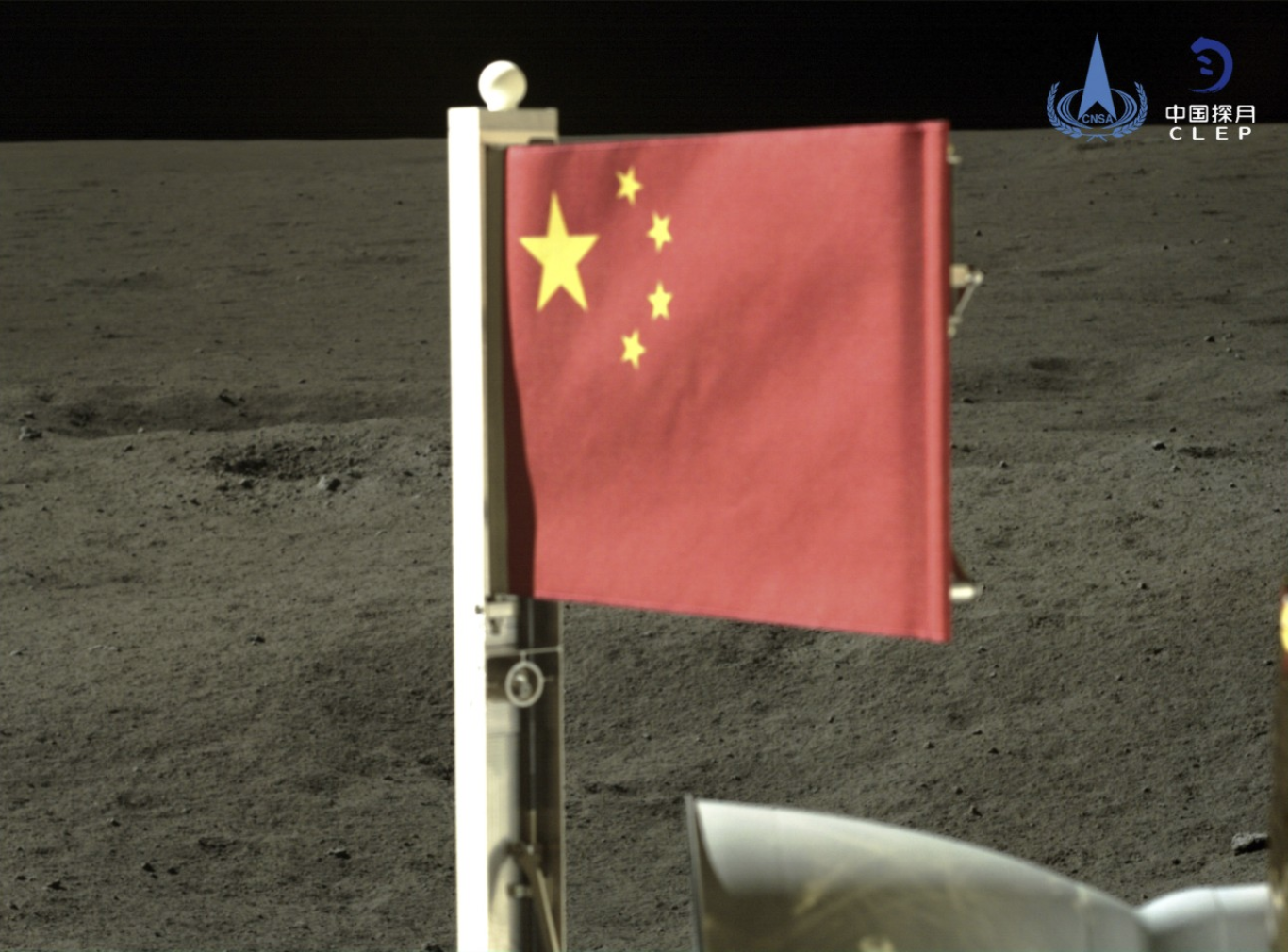
On August 12th 2026, Wang Xiji (王希季), Chief Designer of China's first launch vehicle, passed away at the age of 105. An exceptional destiny for a man and a nation, which gives us pause: in just over half-a-century, the country rapidly expanded its conquest of the space domain, in orbit and beyond. Mastering a comprehensive, dual-use national program, China’s space ambitions span high launch cadence, mega-constellations, a booming commercial sector, human spaceflight, lunar and planetary exploration, and counterspace military capabilities.
Ranked as a top global space power alongside the United States, under state direction from the China National Space Administration (CNSA), China Manned Space Agency (CMSA), and entities under the People’s Liberation Army, the country fuels its own brand of commercial firms. As made abundantly clear by the State Council of China, Beijing’s stated objective is to become a “leading space power” with space technology serving scientific, economic, technological and national-security goals.
Launch cadence and industrial base
China set a national record with over 92 orbital launches in 2025, a 35% increase over 2024 with a near 100% success rate. 2026 points to another launch cadence record year, projecting over 140 launches, driven by constellation deployments and commercial vehicles, rising even beyond the 2025 73 launches conducted under China Aerospace Science and Technology Corporation (CASC) alone. With commercial facilities expanding, launches occur from the sites of Jiuquan, Xichang, Taiyuan, Wenchang, and the Haiyang sea platforms.
The Long March rocket family remains the backbone, while commercial providers (LandSpace (Zhuque rockets), Galactic Energy, iSpace, CAS Space, others) debuted new vehicles. Reusable rocket development advanced with first flights and recovery attempts in 2025–2026, with further tests of vehicles like Long March 10 variants and others. The industrial-base underneath the Chinese civil-military fusion encompasses state primes, provincial commercial "national teams," and a private tier, scaling and converging on reusable, high-cadence launch as the enabling infrastructure for megaconstellation deployment.
Mega constellations and commercial surge
China operates GPS rival BeiDou, plus extensive Earth-observation fleets, while building Low Earth Orbit (LEO) broadband mega-constellations: state-backed Guowang by SatNet (~13,000 satellites) and Shanghai-backed Qianfan/Spacesail (10,000+) by Shanghai Spacecom Satellite Technology (SSST). These capabilities for agriculture, disaster management, mapping, communications and economic activity are inherently dual-use, facing a US-led space architecture increasingly built around distributed LEO assets.
Deployment accelerated in 2025–2026, still far below Starlink’s scale. Serving civilian Internet/IoT and strategic purposes, Chinese commercial space expanded rapidly with hundreds of firms, satellite manufacturing “super factories,” policy support as a growth engine, and investment. On-orbit servicing, laser communications, and other tech demos aim for strong market value growth. Mega-constellations provide communications, navigation, sensing and data services on a global strategic scale, while giving China an opportunity to export space-enabled infrastructure and standards internationally. The distinction between “commercial” and “state” space in China is therefore less clear-cut than in the U.S.: Chinese commercial firms can simultaneously pursue commercial opportunities and support national security strategic objectives.
Tiangong Space Station: China's orbital crown jewel
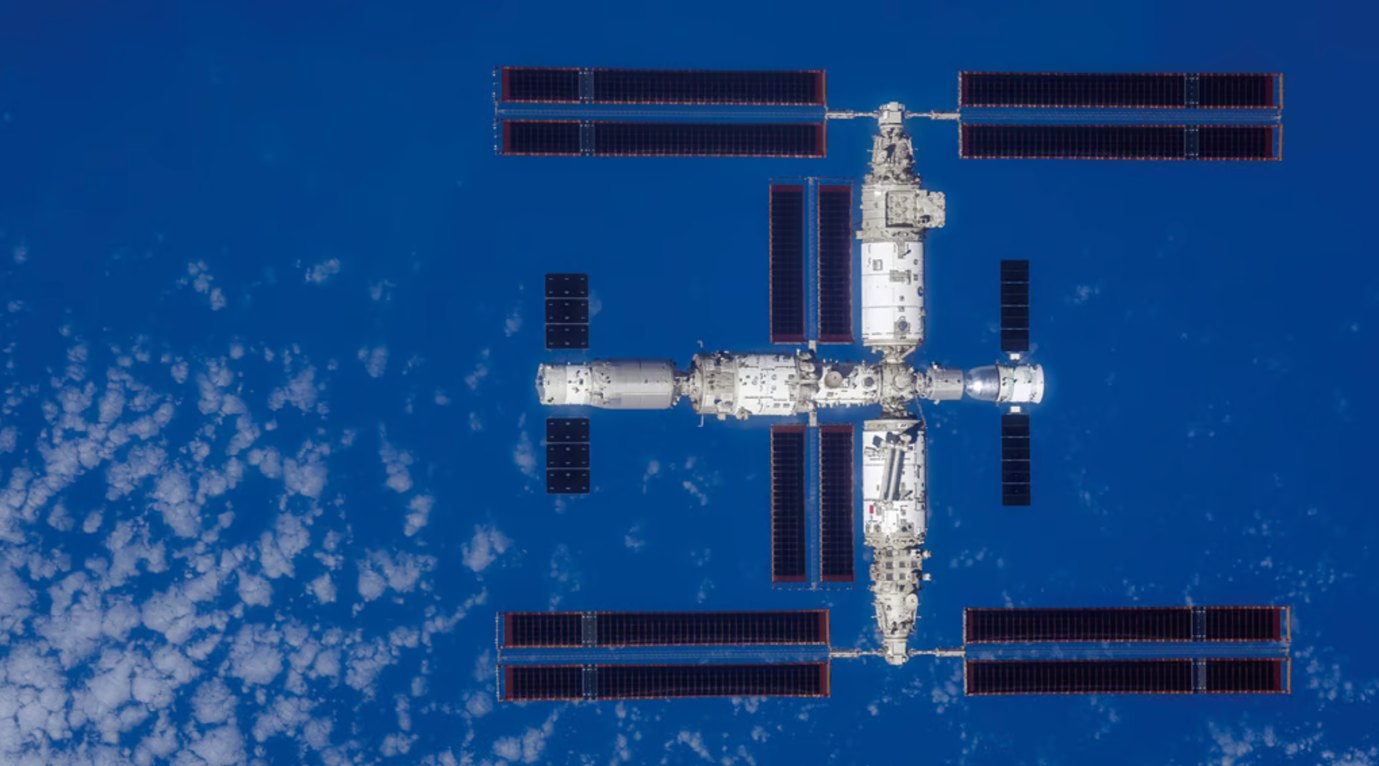
The Tiangong space station, completed in 2022 via its three core modules (Tianhe, Wentian, and Mengtian), supports continuous crewed operations with six-month and longer rotations. Crews conduct extensive science (life sciences, materials, microgravity physics, medicine, new energy research), EVAs, and technology tests. In 2025, China handled its first major human spaceflight emergency via a rapid unmanned rescue launch and crew transfer.
In May 2026, Shenzhou-23 successfully carried another crew to Tiangong for an in-orbit rotation. China described this as the seventh crewed flight since the station entered its application and development phase. CMSA's plan is two crewed spaceflight missions and one cargo resupply mission, including Hong Kong/Macao astronauts, plus a short-duration mission for a Pakistani astronaut as payload specialist. Tiangong aced the uncrewed test of next-generation Mengzhou spacecraft’s larger, multi-role for LEO and lunar use. The significance goes beyond prestige, as Tiangong gives China an independent platform for developing technologies and operational experience relevant to longer-duration missions, including, ultimately, crewed lunar exploration.
The Moon and Deep Space
Beijing's human-spaceflight programme is simultaneously pursuing crewed lunar exploration, making the Moon the natural next step after Tiangong. China’s lunar ambitions are structured through its systematic Chang'e robotic program, which now merges directly into crewed landing frameworks. Chang’e-6 returned the first samples from the Moon’s far side (2024). Chang’e-7 (from late August 2026 onward) will explore the south pole with an orbiter, lander, rover, and hopping probe focused on water ice and resources. Chang’e-8 (2028) will test in-situ resource utilization. These support the International Lunar Research Station concept (ILRS basic structure built by ~2035, with partners including Russia), and a crewed lunar landing goal before 2030 using Long March 10, Mengzhou, and Lanyue lander. Hardware tests (abort systems, lander simulations, rocket stages) are underway.
Beyond the Earth-Moon system, China maintains active interplanetary exploration, demonstrating ambitions well beyond the Earth-Moon system. The Tianwen programme produced China's first successful independent Mars mission, with Tianwen 1 placing the Zhurong rover on Mars, while ongoing orbital assets continue regional surveys. Asteroid exploration is underway with the Tianwen-2 mission targeting near-Earth asteroid 2016HO3 for observation and sample return.
Beijing's longer-term plans aim at additional planetary and asteroid missions, with the planned Tianwen-3 Mars sample return (~2028–2031), and later Jupiter and Outer Solar System concepts. Its 2024–2050 space-science plan includes high-energy astronomy, solar-terrestrial physics, lunar and planetary evolution, microgravity and space life sciences as national priorities. China's programme includes a substantial scientific component aimed at building internationally competitive strategic capabilities in astronomy, planetary science and fundamental physics.
Counterspace capabilities and strategic posture
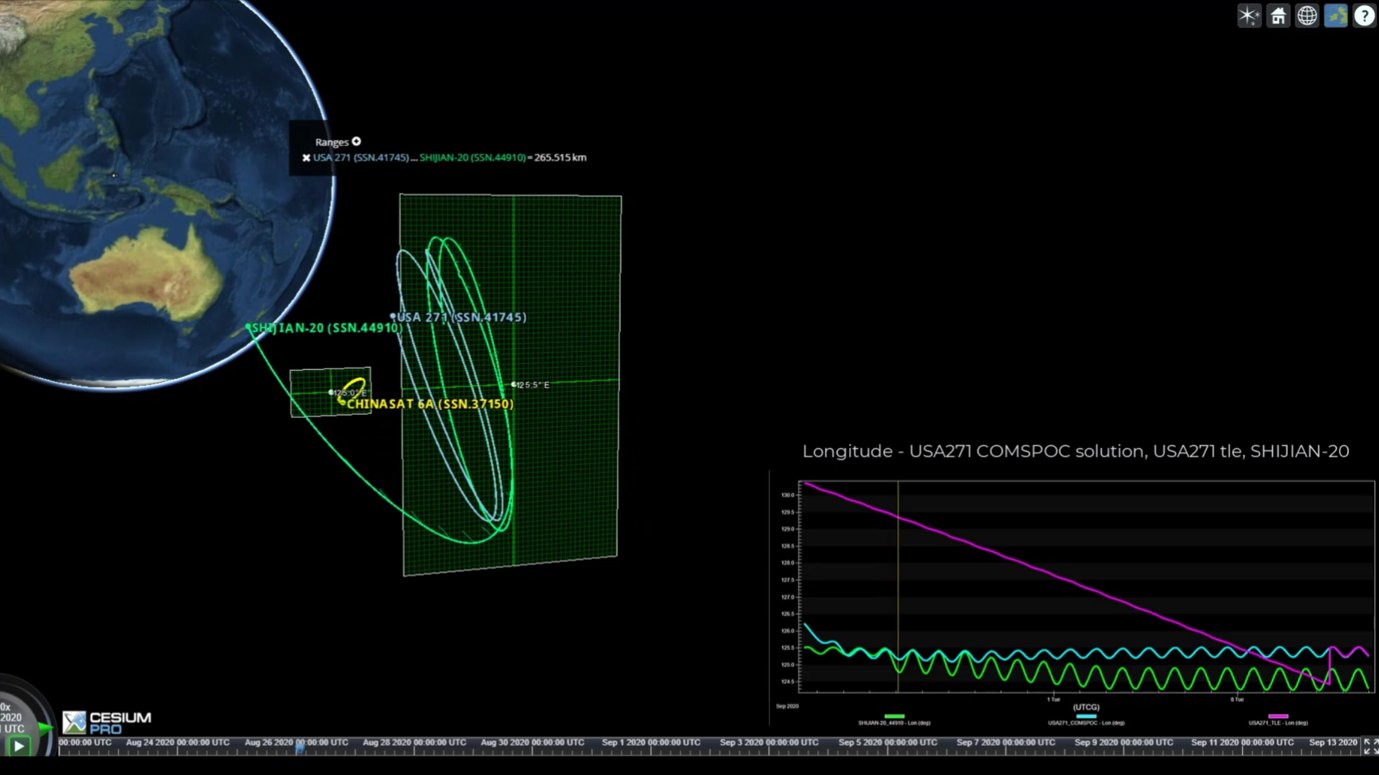
China has developed counterspace capabilities, including anti-satellite missiles, electronic warfare, jamming, lasers and sophisticated rendezvous and proximity operations technologies, currently active in orbit on a regular basis. The People's Liberation Army regards space as integral to modern warfare, particularly for communications, intelligence, surveillance, reconnaissance, navigation and precision targeting. In 2025 the U.S. Department of Defense assessed that the People's Liberation Army is developing capabilities intended to constrain an adversary's use of space in a conflict.
Paradoxically, China emphasizes the peaceful use of outer space, while many of its civilian technologies have obvious military applications. The 2026 Secure World Foundation Global Counterspace Capabilities report flags a likely Chinese on-orbit refueling experiment through the second half of 2025 and reports of a possible new direct-ascent ASAT interceptor, alongside a broader trend toward "bodyguard" satellites and spaceplanes with co-orbital capabilities. U.S. congressional testimony specifically flagged China's Shijian-25 satellite conducting an on-orbit refueling of a BeiDou satellite in GEO in February 2025 as a marker of maturing rendezvous-and-proximity-operations tradecraft with clear dual-use signaling value.
A joint-investigation by The Insider, Der Spiegel and Le Monde describes Beijing and Moscow coordinating on electronic warfare, cyber operations against satellite networks and ground infrastructure, directed-energy interference with optical sensors, and co-orbital inspection satellites, explicitly aimed at countering resilient LEO constellations like Starlink that underpin Ukrainian battlefield communications. This industrial partnership - Russian operational experience in military space and electronic warfare combined with Chinese manufacturing capacity and capital - produces capability neither state could build alone.
China vs the West: the verdict
The U.S. still dominates in reusable launch vehicles and LEO broadband. SpaceX leads in launching payloads to orbit and beyond, while Starlink’s level of LEO connectivity nodes remains unrivalled. The strength of the US commercial space ecosystem and deep-space exploration initiatives, pending new anti-satellite weapons, keep the nation at the forefront of space power innovation.
However, China leads ruthlessly in counterspace warfare, due to aggressive development of ground-based anti-satellite missiles, electronic jammers, space-based directed-energy weapons, and cyber disruption. China further remains dominant in Earth observation and satellite navigation.
Advanced imaging networks like the Gaofen and Jilin-1 constellations provide rapid, nearly continuous surveillance of conflict theaters, supporting adversaries, preparing for future conflicts. The BeiDou network outnumbers U.S. GPS satellites, granting heavy precision and dominance over the Indo-Pacific region.
China continues to run two parallel tracks: an increasingly assertive ‘Space Silk Road’ / Belt and Road Initiative-bundled offer for satellite services and launch access, plus a lunar partnership via ILRS competing with the Artemis Accords architecture; and a domestic narrative that frames 2026 as the year state and commercial programs "advance rapidly" together under the new Five-Year Plan.
Conclusion
China developed a remarkably broad and increasingly mature space ecosystem, despite setbacks. Its trajectory makes space a central arena of long-term technological and geopolitical competition. Near-term priorities (2026–2030) emphasize lunar south-pole exploration and crewed landing preparations, orbital constellation build-out, reusable launch maturation, deeper Tiangong utilization, and science missions. Longer-term goals include a sustained lunar presence, Mars sample return, and human Mars ambitions later in the century.
Integrating state planning with commercial dynamism, China is steadily on track toward leadership, as principal power shaping rules, infrastructure and strategic balance of the emerging space economy. With threatening counterspace capabilities, China’s strategic posture in the space domain is set to demand a decisive response from the U.S. and allies. Lest the West ends up relinquishing control of Earth orbits, cislunar space, and access to the Solar System.
Author: Christophe Bosquillon MSc, MBA
Founder & Director
Senior Fellow, NIDS - National Institute for Deterrence Studies (U.S.)
Fellow, EIPIO - European Institute of Professional Intelligence Officers